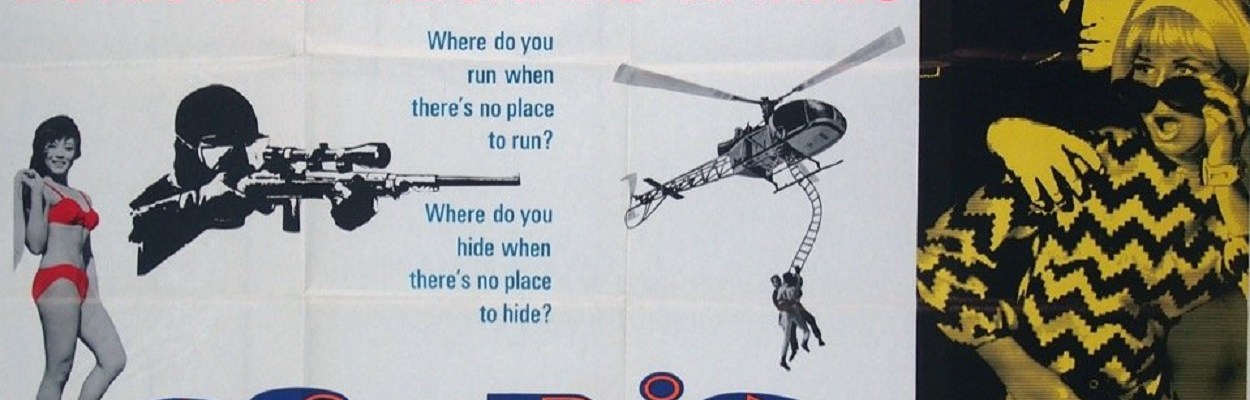
Flipping through some possible DVD choices on a typically fetid, humid summer night here in the Great American Middle West, I popped in director Frank Tashlin’s spy spoof Caprice from 1967 (I needed something with snow in it), starring the one and only Doris Day.
By Paul Mavis
Strictly by chance (she only comes out of her room to either pick at something in the fridge or to see if her parents are finally dead), my youngest teen daughter stopped her perpetual sneer long enough to actually smile and laugh at a few of Miss Day’s antics over the course of 20 (!) minutes, before she stated simply, “She’s funny.” Suddenly realizing she had let the mask fall, she returned to her room with a disapproving smirk and a hair flip, Miss Day already forgotten. High praise indeed from someone raised on 30 second viral clips.
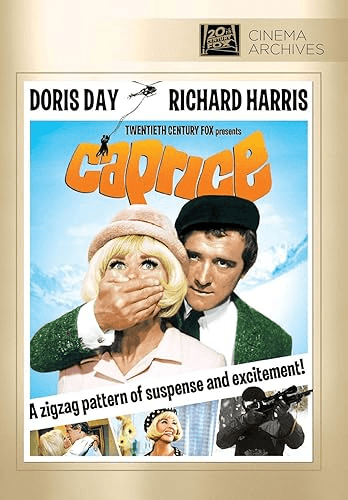
A few years back, 20th Century-Fox (a.k.a. “Another Faceless Entity of the Disney Behemoth”) released, as part of their Cinema Archives DVD collection (is that defunct now?), a whole slew of Doris Day material, including Caprice, the 1967 espionage romp co-starring Richard Harris, Ray Walston, Edward Mulhare, Jack Kruschen, Lilia Skala, Michael J. Pollard, and Irene Tsu, written by Jay Jayson and director Frank Tashlin, and lensed in shimmering CinemasScope (one of the last titles shot in this process) by pro Leon Shamroy. A failure at the box office and with critics during the height of “Bondmania,” Caprice was rediscovered and elevated, briefly, during the post-auteur years by critics who rightly considered Frank Tashlin as more than a journeyman director (now…all those decades of seminal, golden age “film criticism” have been thoroughly attacked and dumped by the fascist young white liberals who come out of the totally useless “film schools,” largely because the older liberal white men and women who wrote all of it…were older white men and women who had the unmitigated gall to actually exist on this planet).
Click to order Caprice on DVD:
(Paid link. As an Amazon Associate, the website owner earns from qualifying purchases.)
Doris plays Patricia Foster, an industrial spy for cosmetics manufacturer Sir Jason Fox (Edward Mulhare). Through a complicated series of set-ups, Patricia makes herself available to rival firm May Fortune Cosmetics, headed by Matthew Cutter (Jack Kruschen). Evidently, Cutter is ready to release a revolutionary hair spray (ask your grammy) that keeps hair dry even when swimming.
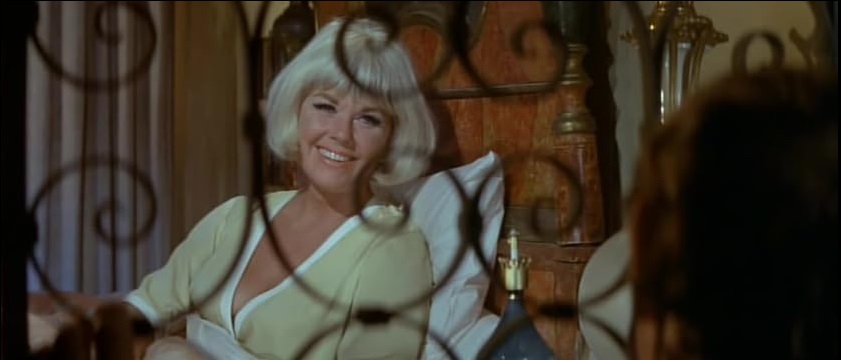
Day’s mission is to get the formula and return it to Sir Jason. Working against her (or with her?) is Christopher White (Richard Harris), an associate of Cutter who tries to keep Patricia away from the formula. Chemist Stuart Clancy (Ray Walston) is the shadowy, faintly unhinged “mad scientist” who may or may not be behind the revolutionary formula, and Su Ling (Irene Tsu) is the beautiful model who also plays a part in tracking down the hair spray known as “Caprice.”

I had a rather grumpy opinion the first time I saw Caprice. Doing research for my book, The Espionage Filmography (by all means, please order a copy from Amazon so those fucking gonifs my publisher, McFarland & Co., can claim yet again that no one is buying my book and that they don’t issue residual checks for amounts below 20 bucks), I had to watch a bootlegged panned-and-scanned videotape of it supplied to me by a U.K. friend (it hadn’t been released at that time in the U.S.). Caprice came off as disjointed and unfunny to me at the time, with the poor quality of the videotape not helping any in my negative assessment.
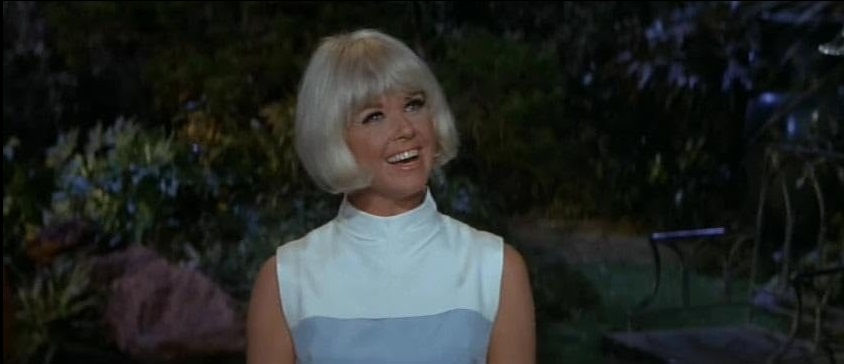
Seen now through the wonders of DVD clarity, Caprice looks light-years better, in a meticulously restored CinemaScope print. I was more receptive to the movie’s quirks this time, too (maybe I had bottomed out at the time after wading through over 1700 spy flicks), but there are still big problems with Caprice. It’s certainly enjoyable, but it’s not the neglected, misunderstood masterpiece that some of those old racist, misogynist, elitist critics would have had you believe.

So much of Caprice is so startlingly good, that you want to say it’s better than it really is. But you leave the movie thoroughly frustrated with its choppy construction and wild mood swings; and it winds up as definitely less than the sum of its parts. Perhaps it was wildly overpraised on rediscovery because it looks so good next to the dreck that Day ended her movie career with; Caprice at least tried for something different–something that can’t be said for forgettable junk like The Ballad of Josie and Where Were You When the Lights Went Out. But that’s a low bar for reappraisal.

I only recounted the very bare bones of Caprice‘s plot, so as not to spoil it for the uninitiated, but truly, the complicated cross and double-cross plot only serves as a framework for director Frank Tashlin’s trademark set pieces. The problem with those Caprice set pieces—regardless of how well they’re executed—is that they’re two of a different kind: spoof and serious spy thriller.
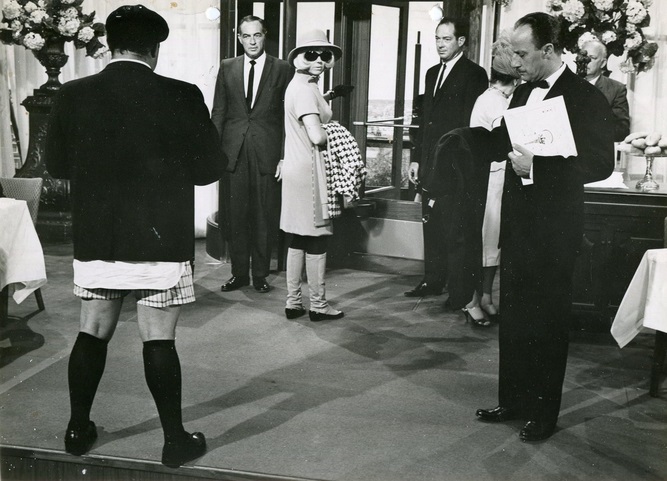
Aiming to recapture the spirit of Charade and Arabesque, rather than Fox’s Derek Flint spy spoofs, Caprice wants to switch tone from serious action piece to silly slapstick, from dramatic, romantic scenes to comedic, farcical ones, as director Stanley Donen’s Charade and Arabesque effortlessly did. But the seams between the two tones are a mile wide; they don’t mesh properly, and Caprice veers wildly off course every ten minutes or so when a good, solid dramatic sequence is followed by a very funny, expertly executed Frank Tashlin comedy scene.
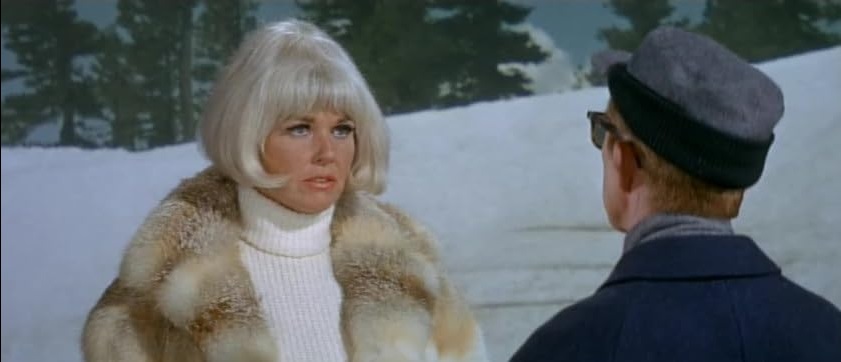
Tashlin, who prior to his successful motion picture career with Jerry Lewis and other film projects (Will Success Spoil Rock Hunter?, The Girl Can’t Help It) worked in the Warner Bros. animation department, obviously knows how to set up a gag. And many comedy scenes in Caprice bear the unmistakable Tashlin energy and rhythm. The apartment sequence, where Day and Harris are chased through various levels by the cops, is quite funny (Doris’ little bowler hats remind me of Harry Langdon’s stock costume), and Doris’ big set piece, where she tries to clip a lock of Tsu’s hair, and winds up hanging off the bottom of a precipitous sun deck, is brilliantly constructed and surely executed.
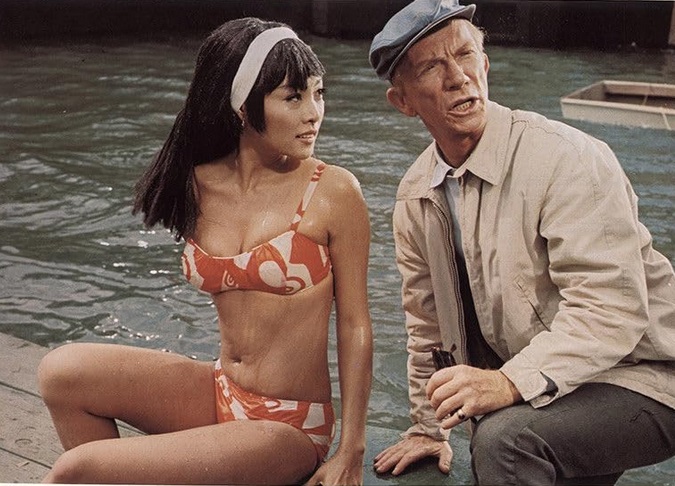
Tashlin’s penchant for twisting his own filmic elements is also on display in the funny sequence where Doris is trying to thwart a microphone hidden in a sugar cube. Tashlin’s exaggerated sound effects (something Jerry Lewis earlier borrowed for The Nutty Professor) are an hilarious counterpoint to the sequence, culminating in an off-screen belch from Day that’s a comedic highpoint of Caprice.
RELATED | More 1960s film reviews
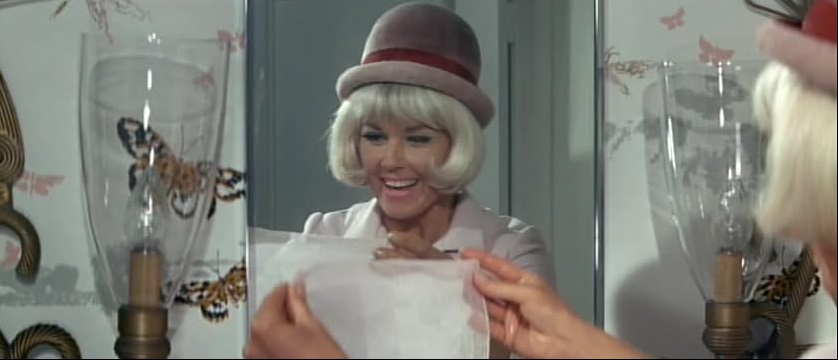
But other comedy set pieces fail, including a shark sequence that turns out to be a lame Flipper in-joke, while many of the supposedly light comedy/romance sequences fail to find their correct tone. Tashlin’s serious sequences work well, too, but they have no relation to the comedy ones. A fabulous ski sequence involving Doris and an assassin is as well executed as any James Bond scene from the 1960s, but it anchors a serious, downbeat third act of a movie that doesn’t know whether it’s a comedy, spoof, or serious spy work.

And ultimately, neither does the viewer. Caprice is at least two movies spliced together, and while individual scenes in Caprice work extremely well on their own, the mix does not, leaving you with a frustrated feeling that the director missed hitting his mark, while coming agonizingly close to creating something truly special.

Famously, Doris Day remarked in her autobiography that Caprice was her least favorite movie. While I certainly don’t think it’s anywhere near her worst, I can imagine its critical failure was particularly stinging to Day, considering it marked the end of her audiences’ unconditional love affair with the star. The Ballad of Josie, a pallid Western comedy co-starring Peter Graves, had come out four months before Caprice, and it was not well received. Caprice proved even more unpopular with the critics, with the media, for the first time, openly questioning Day’s place in a rapidly changing film industry.
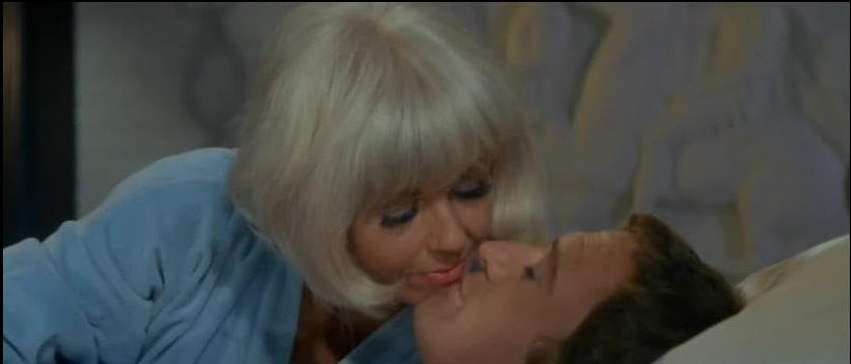
Of course, as many movie fans know, the year Caprice came out was the same year that the hugely influential The Graduate premiered—a movie that was designed with Doris Day in mind for the part of Mrs. Robinson (Day asserted she turned it down for moral reasons, but many feel her husband/agent/manager Marty Melcher nixed it without telling her). Regardless of how Day may have felt about the moral content of The Graduate, the fact was that in 1967, she was making Grade B spy spoofs (already rapidly going out of fashion that year), while a role custom tailored for her, but which she turned down, was causing a sensation all over the world, and which would have, in all likelihood, reinvented her movie career.
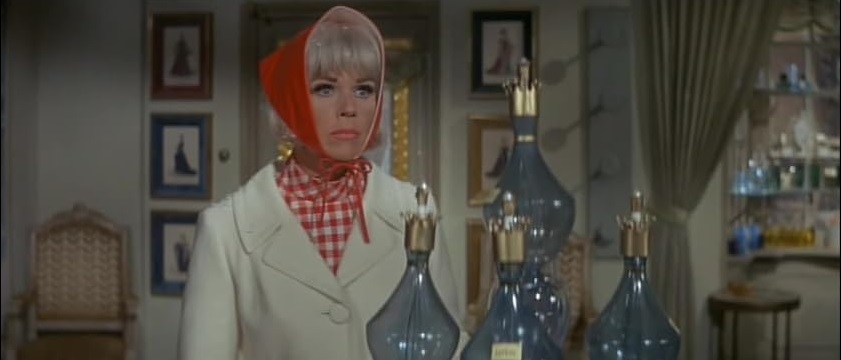
Harris is certainly an interesting addition to the pantheon of Day co-stars, bringing a definite English mod appeal, with a dash of “angry young man” charm thrown in, too. But I’m not sure their chemistry entirely works on screen (they reportedly enjoyed working together, though). Harris, at this point wanting to cash in on his new found celebrity (This Sporting Life was an international sensation), was coming to Hollywood to make money, and it would seem he thought starring in a Doris Day comedy would expose him to a new audience.
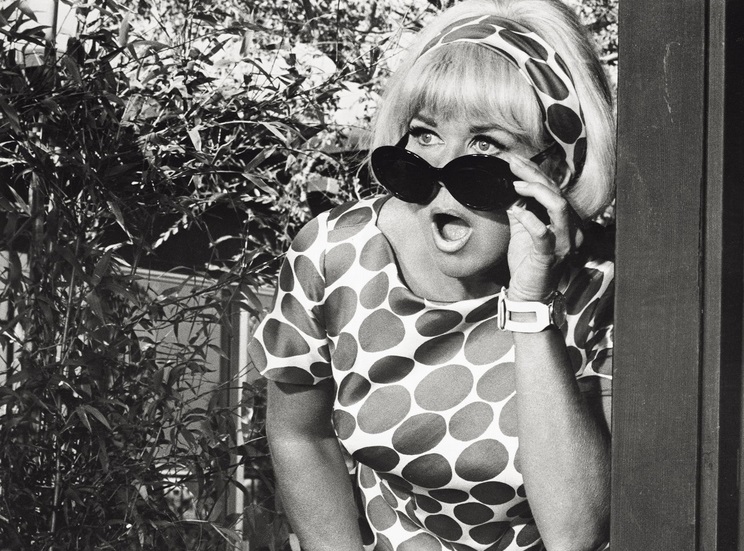
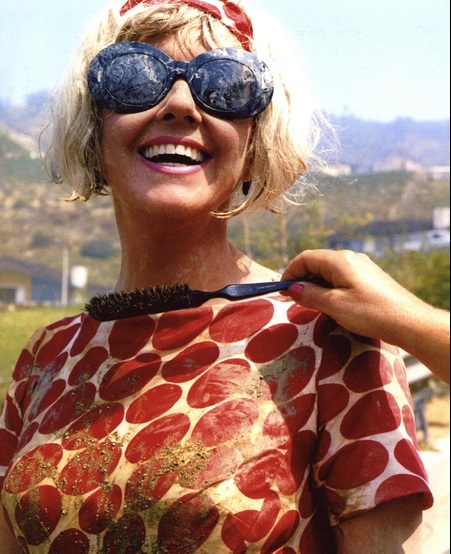
And while Harris is good in comedy, something just doesn’t jell between him and Day on screen. It’s difficult to describe—as indeed it is when stars mesh perfectly on screen—but something is off with them. Perhaps it was, as they both said later, the fact that neither one of them knew, from one day to the next, exactly what kind of movie they were making.
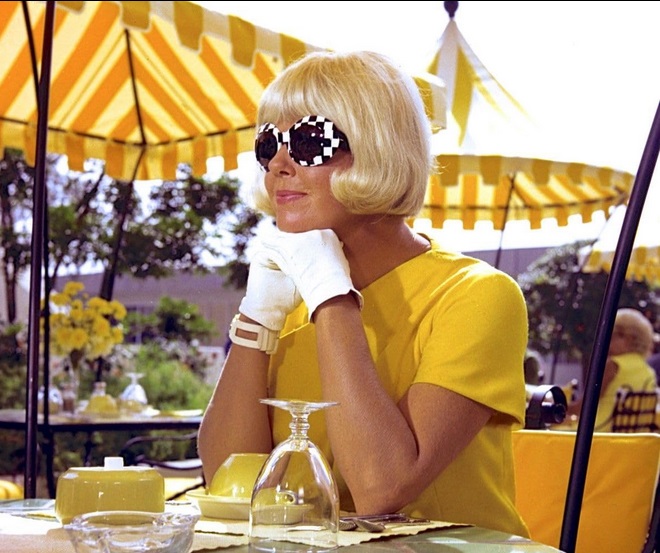
It’s curious to watch Day here in Caprice. She’s such an instinctive, natural actress that you really believe her in her scenes, regardless of the scene’s worth. And she’s quite good in the movie’s more serious moments, lending them a weight that, while admirable, further pulls Caprice out of kilter alongside the broad, gag-filled comedy sequences.

The actress that Hitchcock didn’t need to direct because she was so good, is still evident in Caprice, but the sight of Doris (or rather her stunt double) rolling down a hill, and then getting covered in mud, all at the service of a rather slight little spy romp, is ultimately depressing. Day shows what a good sport she is, despite the silly things she’s forced to do in Caprice, but that’s the last thing we need to see from her at this point in her career. It’s not surprising she disliked Caprice so much—it represented so much more, and less, than just a box office failure.


Read more of Paul’s movie reviews here. Read Paul’s TV reviews at our sister website, Drunk TV.
 Movies & Drinks
I love all your reviews, especially of 60s films. But why this made such a favorable impression on me when I was a kid (I even bought the novelization) I have no idea. I think I just liked everything for the most part. Maybe the Tashlin/Day movie The Glass Bottom Boat was a little better? More goofy Tashlin sight gags. But Doris was always a pro–even when was forced into whatever Melcher signed her up for. Anyway, since I am a fan and do as I’m told, I will buy The Espionage Filmography.
LikeLiked by 1 person
Oh god don’t buy that book. It’s terrible. Written right before 9/11, after which I thankfully returned to my more conservative adolescent and teen roots…and senses (if you wanted to get laid in the college theater department, you had to at least talk like a liberal). Glad you’re a fan. And never apologize for liking a movie, particularly something that struck you like that as a kid. Those are the best kind. Thanks for reading!
LikeLike