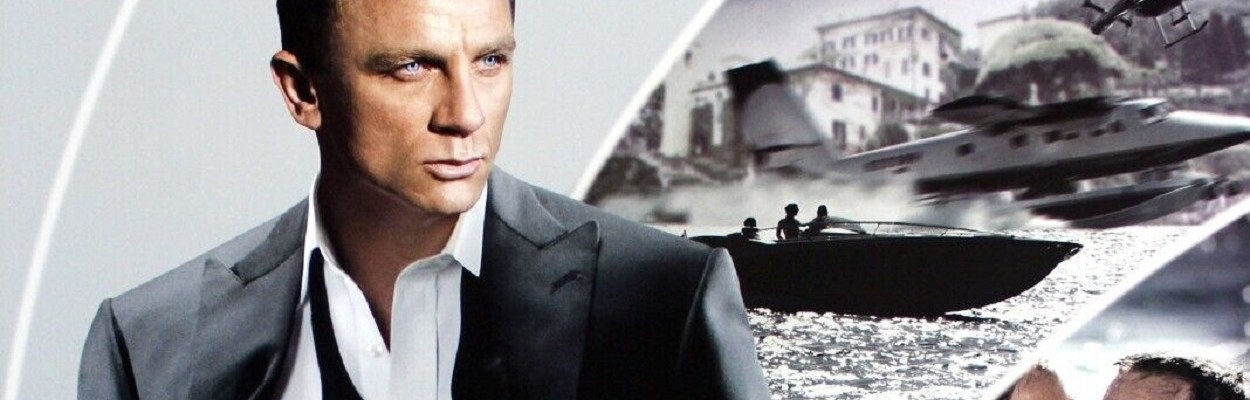
When I was writing about the best James Bond movie, On Her Majesty’s Secret Service, did I mention that the first thing Pierce Brosnan does every morning is kneel down in front of a shrine to Daniel Craig and mumble a silent prayer and “thank you” for Craig saving him from the moniker of “worst James Bond ever”? Well…he does.
By Paul Mavis
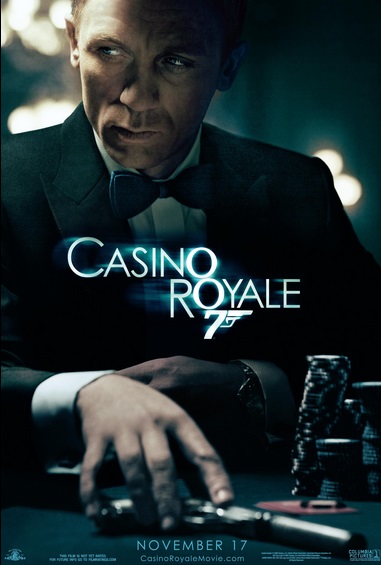
I’ve already written about the Bond mythology’s least-known Bond, the phenomenal George Lazenby, so I thought it high time I say something about the worst, the Frog-Faced Prince of Bondian lore, Daniel Craig, with a look at his first outing, 2006’s Casino Royale. Considering that producer Barbara Broccoli, the clueless broad who utterly ruined the franchise, is now looking for a new Bond, by the time we’re saddled with her latest “box ticking” candidate, Craig, like Brosnan, might not look so bad after all (the latest insider info is that the nervous Bond producers’ only potential candidate so far that meets their current DEI requirements, is a black gay transgender aborted Palestinian baby whale, born at SeaWorld).
Click to order Casino Royale on 4K UHD/Blu-ray:
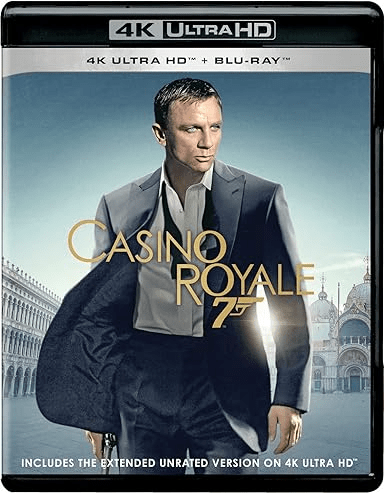
(Paid link. As an Amazon Associate, the website owner earns from qualifying purchases.)
The main plot point of Casino Royale stays relatively close to Ian Fleming’s original Casino Royale, the first novel in the James Bond book series. Bond (Daniel Craig), an agent with MI6, earns his “OO” (double O), license to kill by going to Prague and executing (rather messily) his initial contact man, and a money-stealing rogue agent working for “M,” the head of the “OO” section in London. In Mbale, Uganda, the mysterious Mr. White (Jesper Christensen) has brought together Le Chiffre (Mads Mikkelsen), an investor and gambler, with “freedom fighter” Steven Obanno (Isaach De Bankole), in a scheme for Le Chiffre to invest Obanno’s money to further fund terrorist activities.
What Obanno doesn’t know is that despite his demand to Le Chiffre that there be no risk to his investment, Le Chiffre plans on selling short all his stock in a new super air bus airplane, in the hopes of recouping huge gains when he blows up the plane, with the help of fellow terrorists Alex Dimitrios (Simon Abkarian) and Carlos (Claudio Santamaria), on its maiden voyage.
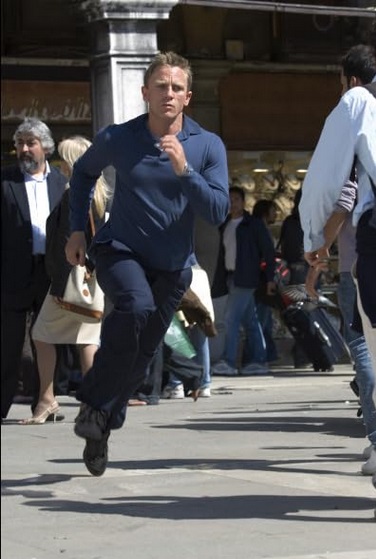
James Bond stumbles onto the bare bones of the plot when he apprehends suspected bomb maker Mollaka (Sebastien Foucan) in Madagascar. Assassinating Mollaka in spectacular fashion inside the Nambutu Embassy, Bond is now on the run for this international incident. Breaking into M’s home, Bond is told by M that his ego will get him into trouble, and that he is a “blunt instrument” to be used by her at her discretion, and that she can’t, at this moment, trust him.
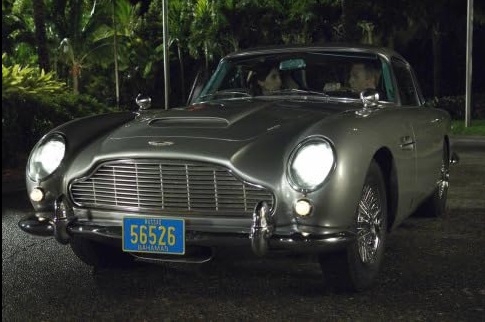
Told by M to hide out somewhere, Bond travels to the Bahamas, where he bests Dimitrios at poker (and wins his 1964 Aston Martin—right out of Goldfinger), while getting information from Dimitrios’ wife, Solange (Caterina Murino), concerning his whereabouts. In Miami, Bond kills Dimitrios, and foils Carlos’ plan to blow up the air bus. Returning to the Bahamas, Bond is met (rather inexplicably) by M, who fills him in on the rest of Le Chiffre’s plot.
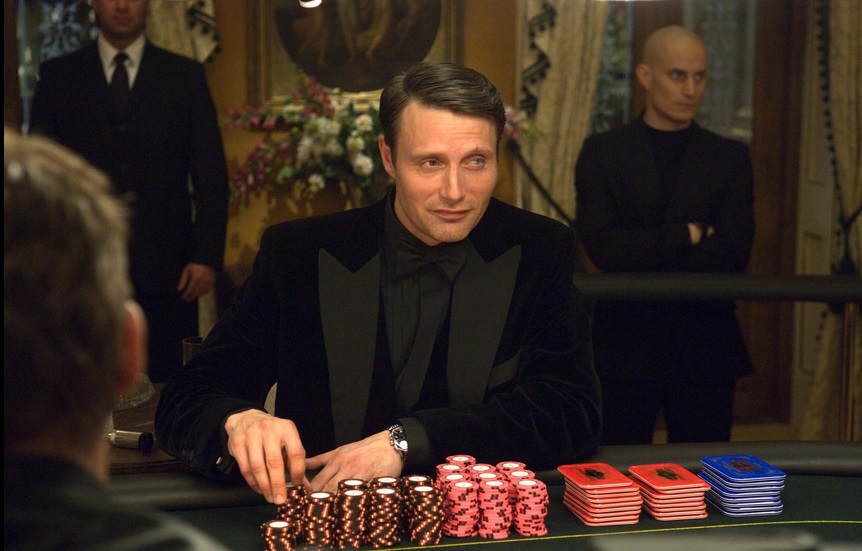
Le Chiffre plans on recouping his losses on the air bus plan by playing in a high-stakes poker game at Casino Royale, in Montenegro. Bond, determined by M to be the best card player at MI6, is given the assignment of breaking Le Chiffre at the poker table, thereby exposing Le Chiffre to his clients who will want his head for losing their money. Then, Le Chiffre will be taken in by MI6, and “turned” for his secrets.

Accompanying Bond to Montenegro is Vesper Lynn (Eva Green) from Her Majesty’s Treasury Department. She will bankroll Bond, depending on if she believes he’s doing well enough at the tables to beat Le Chiffre. Disregarding his cover (Bond’s ego on display again), Bond blatantly baits Le Chiffre at the tables, letting him know who he is, while trying to beat the unstoppable gambler. With the help of shady contact Mathis (Giancarlo Giannini), Bond tries to negotiate his way around the high-stakes game, but eventually loses all his money to Le Chiffre.
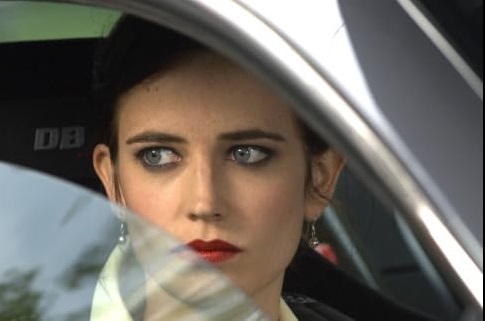
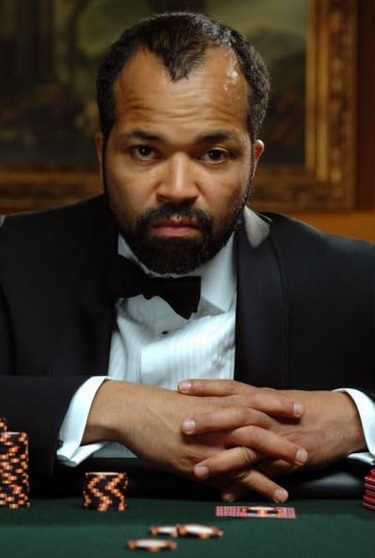
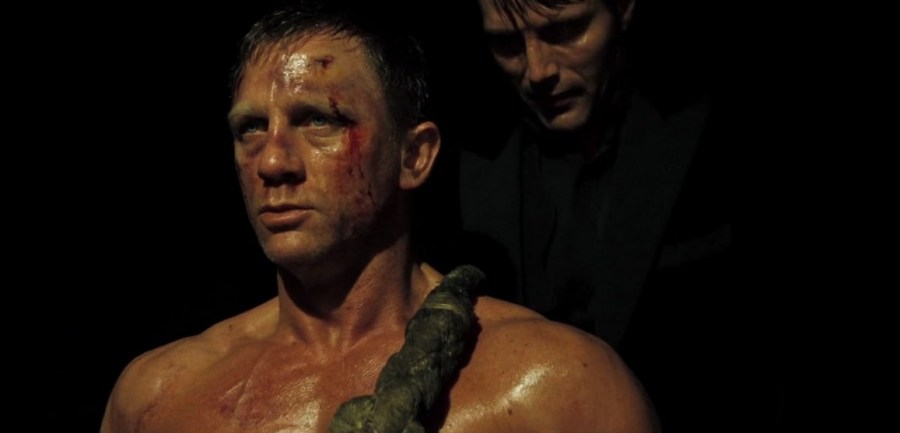
When Vesper refuses to pony up any more money for Bond, James finds backing from fellow player and “a brother from Langley,” CIA agent Felix Leiter (Jeffrey Wright), who believes Bond has what it takes to ultimately beat Le Chiffre. When Bond does clean out Le Chiffre, he doesn’t count on being captured by Le Chiffre, and tortured (a particularly nasty beating to his genitals, right out of Fleming’s book) to find out where his gambling winnings were deposited. Will Bond ultimately triumph over Le Chiffre, and leave the Service to live with Vesper?
Having spent a considerable amount of time over the years thinking and writing about the Bond legend, I don’t mind admitting that when I first saw Casino Royale in the theaters back in 2006, I had a devil of a time trying to figure out exactly where Daniel Craig and Casino Royale fit into the almost mythical, iconic James Bond canon. Back then, watching this supposedly radical revamped reboot of the franchise, there were so many instances of back-and-forth “yes, that’s right,” and “no, that’s completely wrong,” elements and sequences in the movie, that by the end of its exhausting, way too-long 144 minute running time, I wasn’t exactly entertained as much as I was a nervous wreck. Unfortunately now, I know all to well where Craig and this movie place in the Bond canon.
When discussing each Bond film’s individual worth, the first point of contention, at least among fans, usually stems from the viewer’s take on the actor playing Bond. There are those who grew up with Sean Connery, and who absolutely refuse to see anyone else in the role (this used to be the majority opinion, but time is, as always, the great leveler—I would imagine most people under 30 have no idea who he is). Many kids who experienced Roger Moore as their first 007 can’t see the appeal of Connery, and on it goes.
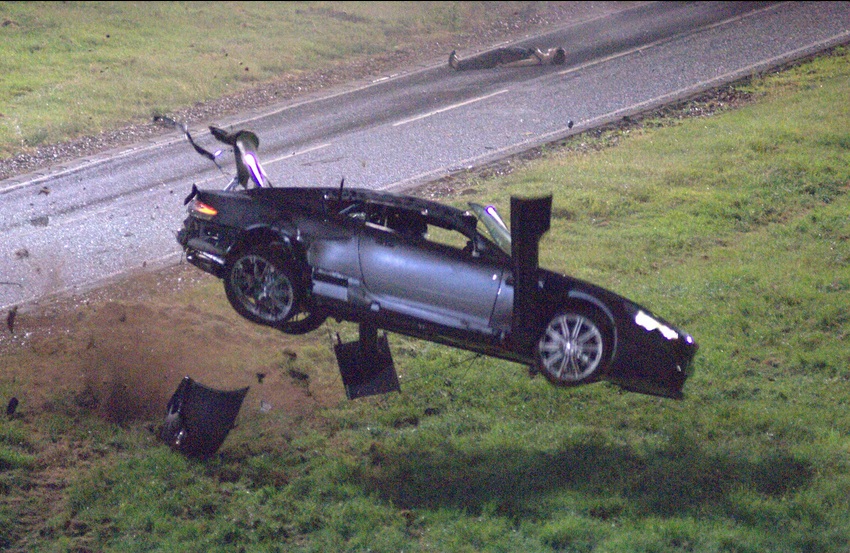
I’ve never had that trouble. I was lucky, growing up at a time where I saw Connery outings on the big screen in “Fantastic Bond Sale” double-feature re-releases, and Roger Moore in his original outings. For me, both brought their own unique appeal to the role. It was about the movies for me first, the actor second. “James Bond” the character was bigger than the actor playing him. I’ve already written about my favorite, George Lazenby. I wasn’t too terribly impressed with Timothy Dalton when he debuted (too small, too “actor-y”), and the less said about Pierce Brosnan the better. But I don’t have an ingrained prejudice against any new actor coming along and playing “my” James Bond.
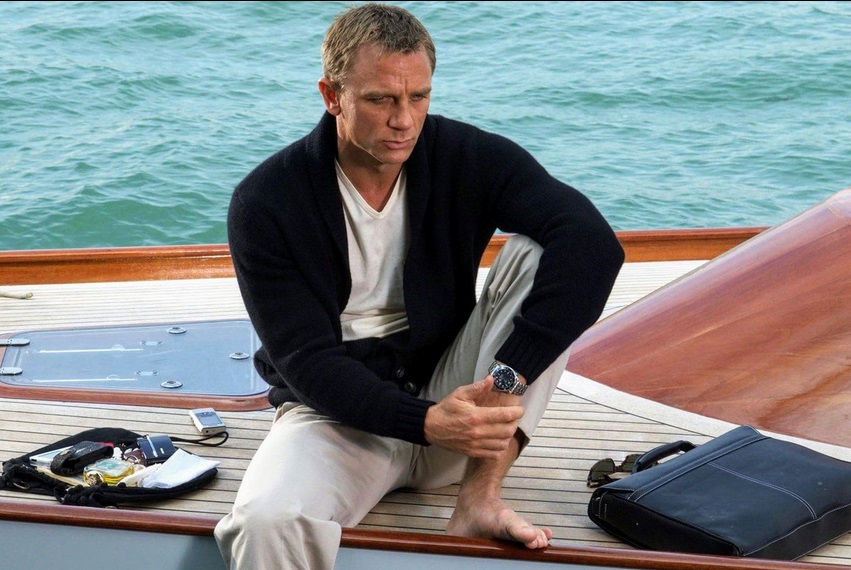
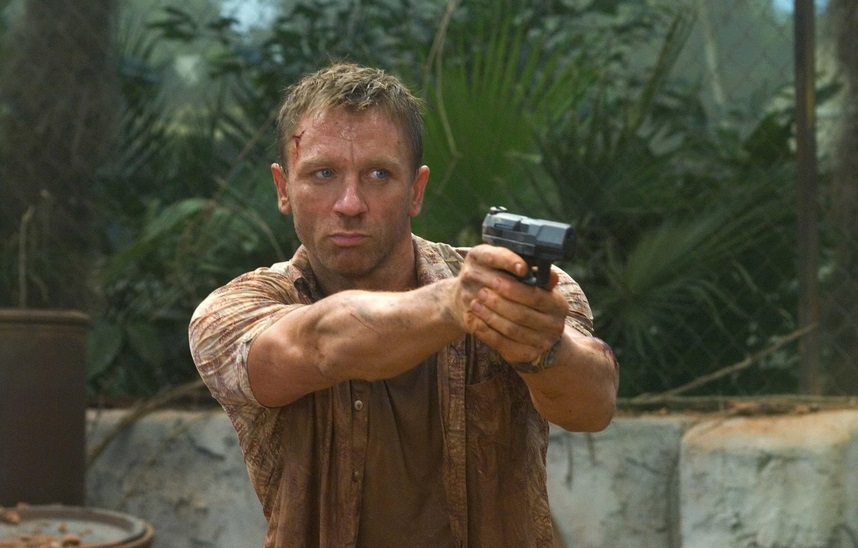
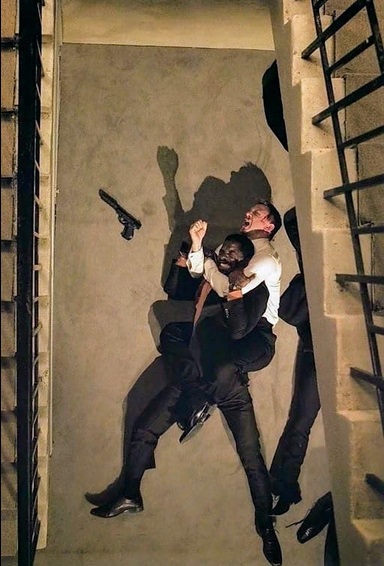
That being said…what the hell do I do with Daniel Craig? I’ve seen Craig before in other roles, and he’s a gifted, intense actor. However, and this may initially sound superficial: he simply doesn’t look the part here (in a Bond promotional documentary, one of the casting directors makes a slip, joking that she never thought of Craig as Bond—she seems to imply that he would have been better as one of the villains). Certainly Craig has to be the most fit, ripped Bond we’ve ever had on screen; he looks tough enough to really take on another spy in a fight.
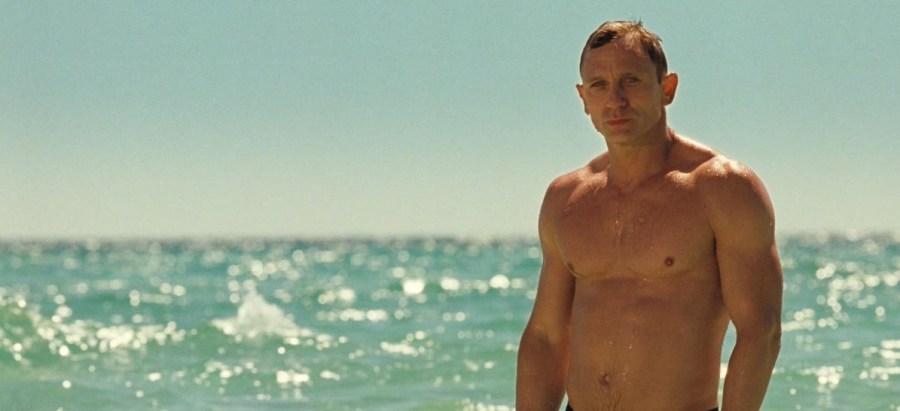
But there is something so closed-off about his frankly unhandsome face, so scrunched down and tied off, with his small, bright blue eyes, and oddly arranged features (look at that celebrated “surf shot”—his head looks strangely small, like one of those shrunken apple crafts), that it’s impossible for me to take him seriously as a man who could cause every single woman to deliberately turn their head, to look at him and stare. That is, after all, the very character, the very essence of James Bond—both in the books and in the movies. This is a man who, according to the lyrics of Thunderball, can get any woman he wants. That’s “any” woman. Period. And every woman, in turn, wants him. Does Craig’s looks fit that requirement?
Yes, the Bond in this incarnation of Casino Royale is supposed to be emotionally closed off, but that doesn’t mean the actor has to be, as well. He can let us in, if he chooses to. But Craig is locked down so tight here it’s difficult to know what’s more torture for him: getting his genitals knocked around by Le Chiffre, or actually playing Bond (and sure enough, after this hit big, all you heard him bitch about was how hard it was playing Bond). I know that Craig said in some interviews prior to the release of the film that widespread protests about his looks had hurt him.
But this is, after all, James Bond. It’s a mythical, iconic character that is the supreme embodiment of every Western man’s male fantasy figure of sex and violence. Bond, in books and movies, is the toughest, as well as the most desirable, man on the planet. He’s a superhero not only in the field, but also in the bedroom, and if we want that secret audience identification to work in the theatres, the actor playing him had better measure up to that ridiculous ideal. Unless, of course, the female producer of the franchise decides to helpfully “update” the character to our more “enlightened” times.
RELATED | More 2000s film reviews
Craig’s confusing appeal (tough as nails, but frankly, odd-looking) as Bond reflects the schizo nature of Casino Royale itself. I heard much talk during the production of the movie that the producers wanted to return to the hard line of the books for this reboot of the series…and I immediately smelled trouble. I’m not sure that returning the Bond series to the tone of the Fleming books was the best idea, and after seeing Craig’s constipated, drama queen output, my fears were confirmed.
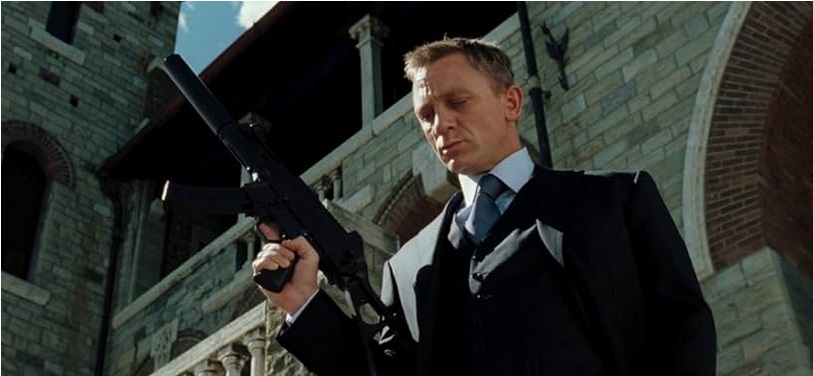
After all, Fleming would have been the first one to privately admit that his spy stories were essentially sado-masochistic fantasy potboilers that owed much more to Mickey Spillane than to Graham Greene. These novels were entertainments, not serious works of literature, but the producers of Casino Royale treat the source material as if it were genuine Greek tragedy. Clearly, the producers (and they’ve been with the series for decades) are embarrassed by the comic-book nature of some of the earlier movies, and they’re bound and determined to squelch out any fun from these new ones.
As Barbara Brocolli said on one of the Casino Royale documentaries, “The world has changed a lot. It’s a more serious world. And we expect our heroes to, I think, fight the battles with better judgement and more responsibility, and with less frivolity.” God, does that mean Bond’s mandate now comes from the U.N.? I’ve never heard a more pretentious crock of shit in my life—particularly when you’re talking about something so inherently fun as James Bond.
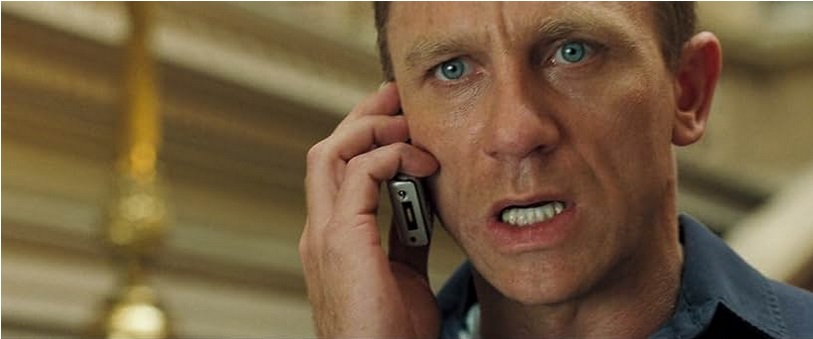
I’m pretty sure that if her father, Cubby Brocolli, the real originator (with Harry Saltzman) of the movie series and a guy who knew how to entertain audiences in a gloriously frivolous way, had heard nonsense like that come out of one of his screenwriters, he would have booted him right off the picture. Immediately. If this serious world needs anything right now, Ms. Brocolli, it’s a little frivolity, particularly in our male fantasy figure supreme, James Bond (and seriously…what a dumbass view of history. It’s always been a mess out there, honey. Get on Google and start with something like “the Holocaust,” and work back through the centuries, you moron).
Perhaps the producers forgot that we were already treated to a “return to the books” mentality for previous Bond films? Certainly Timothy Dalton’s tenure was marked by that specific goal—and it didn’t work with audiences (which had a lot to do with Dalton’s miscasting). Even Lazenby’s turn was marked by a more hyper-realistic tone, with few if any gadgets. Why, in heaven’s name, does Bond have to be so serious now?
I don’t think anyone is asking to go back to the days of A View to a Kill (actually, I’d watch that all day long instead of Casino), but can’t we, the audience, have just a little fun with Bond’s adventures here? Casino Royale‘s central romance doesn’t work, partly because Eva Green is such an enervated actress, but also because hers and Craig’s scenes together are pitched at the tempo of Tristan and Iseult. Where’s the carnal abandon, the sensual pleasure that Fleming so expertly alluded to in his story of “mad love” between Bond and Vesper? With her little girl voice (and that flukey “English” accent that somehow sounds by way of Warsaw) and blank stare, Green utterly fails to register as the girl that tames Bond (if you want to see a real woman believably tame Bond, watch Diana Rigg‘s heartbreaking performance as Bond’s wife in On Her Majesty’s Secret Service).
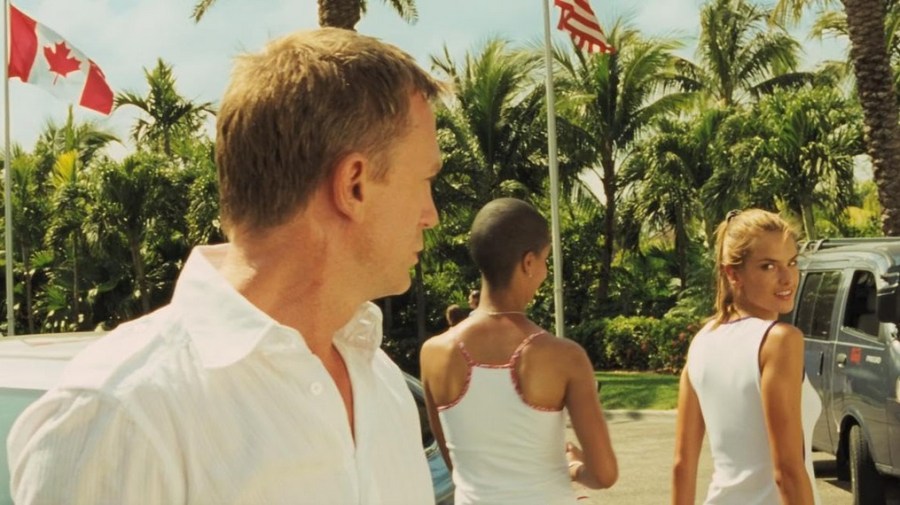
This is Bond’s great romance? Director Martin Campbell can’t convince us of that anymore than he can make us believe that Bond somehow gives up on Her Majesty’s Secret Service because he was tortured. That whole subplot is so vaguely alluded to (there’s never any mention of what he had to endure in his recovery, or if it “changed” him), that we almost miss it before it’s gone. No one discusses it; not Bond, not Vesper. Only the unintentionally funny line, “I’m leaving with what little I have left,” comes close to discussing this seminal (couldn’t resist) moment in Bond’s life.
Casino Royale tries to have it both ways, by giving us some big set pieces that are meant to satisfy our baser action yearnings, but then we have to “pay” for them with large chunks of dialogue in turgid, faux-dramatic scenes, delivered in somber tones, all about the meaning of love, duty and ego. Uh…I don’t need the Bond films for large mediations on “ego” and “love” and “duty.” If I want that in a spy story, I’ll read le Carre.
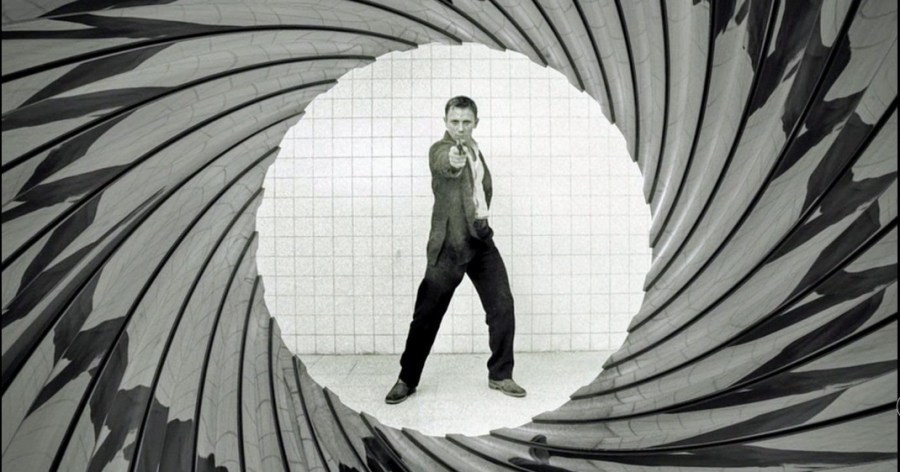
The Connery and Moore James Bonds did what they did because they liked it: pure sensual abandon run amok. The black and white opening of Casino Royale seems to indicate a hyper-realistic level of violence that you don’t normally see in a Bond film. And I was ready for it; finally, after Brosnan’s pretty-boy reign, we have a Bond that enjoys killing. But that’s soon followed by a ridiculous chase scene in Madagascar with Bond and Sebastien Foucan involved in some “free running” nonsense (with the discreet help of some CGI) all over a construction site—a joyless exercise in logistics which plays rather like the silly later Moore films…or the “parkour!” episode of The Office.
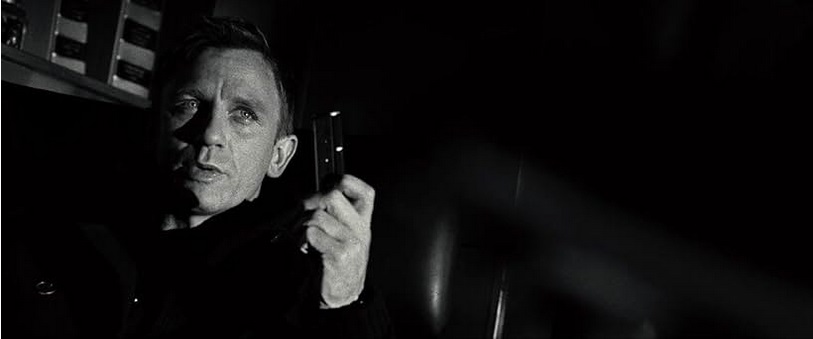
More long, long dialogue scenes follow, and then we’re treated to a badly staged Miami sequence where Bond battles Claudio Santamaria in a truck, a scene which seems to be taken right out of Licence to Kill. Casino Royale is constantly like that: here’s a bone to you action-loving yokels, and here’s some warmed-over Graham Greene for those of you who are embarrassed to be watching a mere piffle like a James Bond movie.
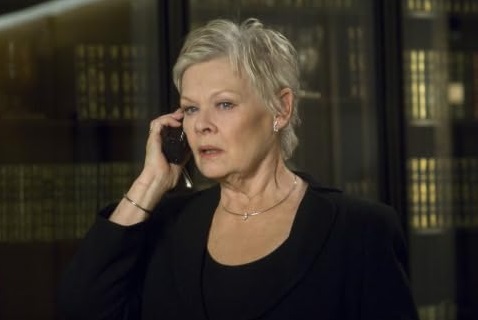
Perhaps most distressing of all in Casino Royale is the single holdover from the previous Bond films: Judi Dench as M. I had no qualms, back when she first showed up as M in GoldenEye, in saying that her inclusion as Bond’s boss was a horrible mistake for the series. And I still feel the same way today (but obviously, after hearing Barbara Brocolli talk about “responsibility” and “judgement,” the Bond films aren’t made for men anymore). Why should I, as a loyal Bond fan, need to hear dialogue from Dench that castigated the character I love, calling Bond among other things, a “misogynist dinosaur” (a line from GoldenEye, and an attitude that carries right over into Casino Royale, as evidenced by Dench’s and producer Barbara Brocolli’s own comments in Casino Royale documentaries).
I thought that was one of the pleasure of going to see a Bond flick: to see the gratuitous sex and violence, to revel in Bond’s carefree attitude towards women, guns, drink, good food, gambling, and most sensuous of all…death. This is, as I’ve said before, male fantasy time. I’m not looking for a dressing down and a lecture from Oprah or my female HR rep (they’re all female now—figure out why) when I go see Agent 007.
Not only is it apparent, particularly here in Casino Royale, that Dench’s role is being beefed up to satisfy Dame Dench, it’s distorting the M character beyond all recognition. M would never go out into the field to give Bond info that he could have gotten from any researcher, as she does here in Casino Royale, nor would Bond have to constantly rely on M for all the endless exposition in this too-long movie, either, to keep him up to speed.
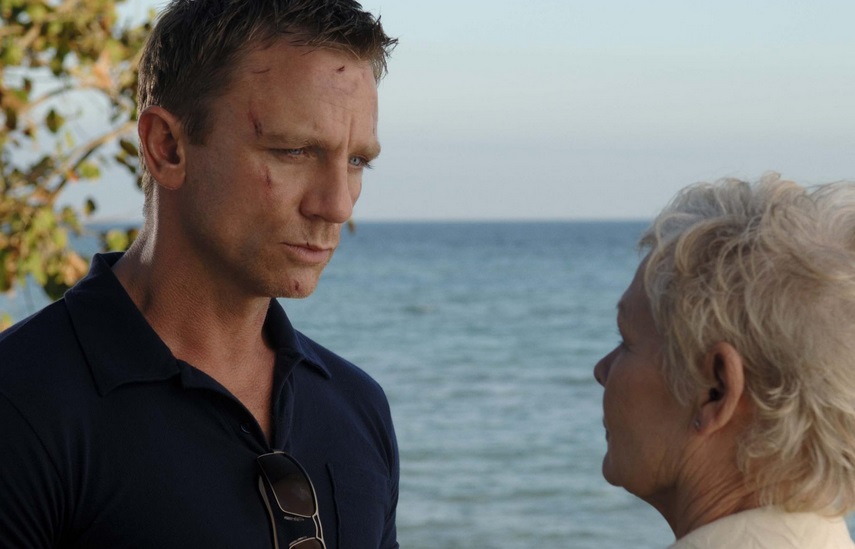
That being said, how are we to disassociate Dench’s previous turns as M, in Casino Royale? After all, this is a prequel, if you will, and M and Bond are supposedly new to each other here. But Dench’s M still carries over a powerful distaste for Bond’s aggressive, essentially “male” manner (hence all the lectures on “ego” she gives him), so we’re treated to more disapproving looks from Dench (it’s obvious she still thinks of him as a “misogynist dinosaur”).
The problem with casting M as a woman is that it totally subverts the original intention of Bond and M’s relationship in the books and previous movies. M’s surrogate “father” role was tenuous, at best. Hardly looking out for Bond, crusty M knew what Bond could achieve and he let him do it—but after first giving him a load of grief. M was a gigantic pain in the ass to 007; that’s why Bond was always going off on his own, doing things his own way. He wasn’t trying to prove anything to M, nor please him; in fact, Bond took supreme pleasure in pissing off M.
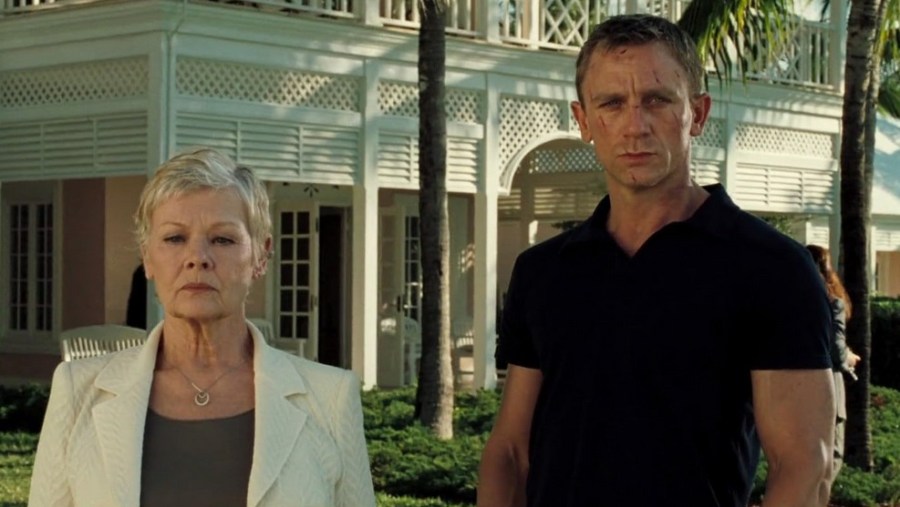
But with Dench in the role, the dynamics have drastically changed. Bond now comes off as essentially a naughty little boy whose pranks are to be endured by disapproving, but ultimately indulgent, “M”ommy. There are constant shots of Dench giving Bond these winsome little half-smiles that say, “Everything is okay – Mummy’s here,” that totally undercut the ruthlessness of the Bond character. When the hell did Bond ever need a woman to tell him everything was okay? If you find that sexist or misogynist, good. I’m glad. It was meant to be. As I wrote in my other Bond review for this site: keep your P.C. hands off Bond; get “sensitive” with some other franchise.
As for the nuts-and-bolts aspect of Casino Royale—the violence, the real reason we go to see Bond movies—the action scenes are grave and somber, but in short supply. The hand-to-hand combat scenes here are tops, but frankly, there’s just not enough action to keep the series’ best-conditioned Bond busy. Fatally sinking Casino Royale is the main gambling sequence. Fleming, who could write about cards better than any other author, really grabbed you with his descriptions of baccarat and chemin de fer, and the suspense that goes along with high-stakes gambling.
But where is that sense of excitement in Casino Royale? A terribly drawn-out, and clumsily constructed sequence in the middle of the movie, this casino sequence should be the highlight of Casino Royale, but instead, we’re saddled with an unimaginative staging of poker, with no sense of strategy imparted by the director, on a set that frankly is unworthy of a Bond movie.
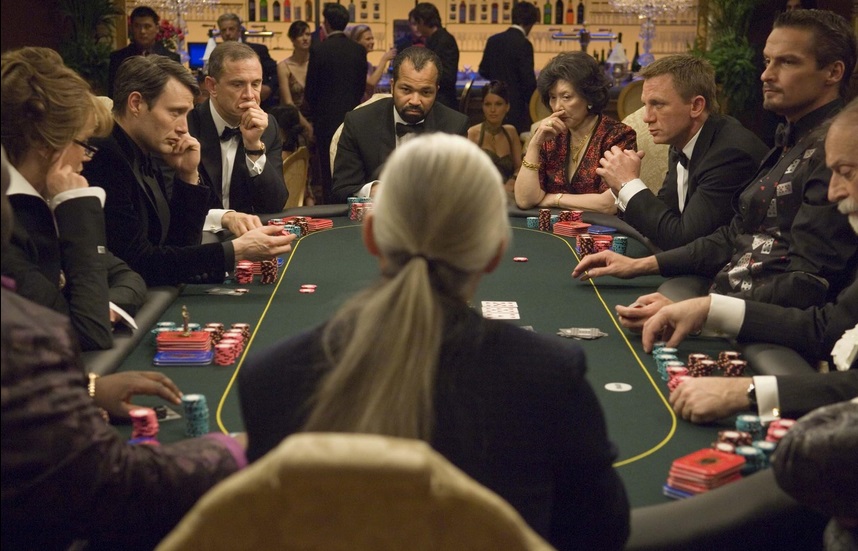
When I saw the private salon for this game on the big screen, I laughed out loud. Not only does it look like a bad Las Vegas gaming room, it’s lit and shot in a most pedestrian manner. And if that’s the way those salons look in real life, then make them look better for the movies—after all, that’s what movies are for: for fantasy. Check out the casino set in Thunderball to see how it’s done.
The whole movie suffers this way, from a cramped, dark production design that imparts no awe or “gee whiz” appreciation that “Bond look” designer Ken Adam effortlessly achieved (quite a shock here, too, coming from long-time Bond production designer Peter Lamont). Bond is supposed to inhabit a world we mere mortals will likely never see, a world of luxury that he’s not really entitled to enter either, except for the fact that he has a license to kill that grants him entrance to these forbidden pockets of excess.
So where is that sense of scope in Casino Royale? It’s frankly an ugly movie to look at, with little or no sense of style to its lensing or compositions. Again, one gets the feeling that everyone involved didn’t want “pretty pictures,” that those big sets were somehow artistically “dishonest” in a world that now sees Bond’s exploits as outlandish actions that need an apology. What a shame. I’ll take the “dishonesty” of Blofeld’s volcano lair in You Only Live Twice any day over the depressing, dark, small look of Casino Royale.
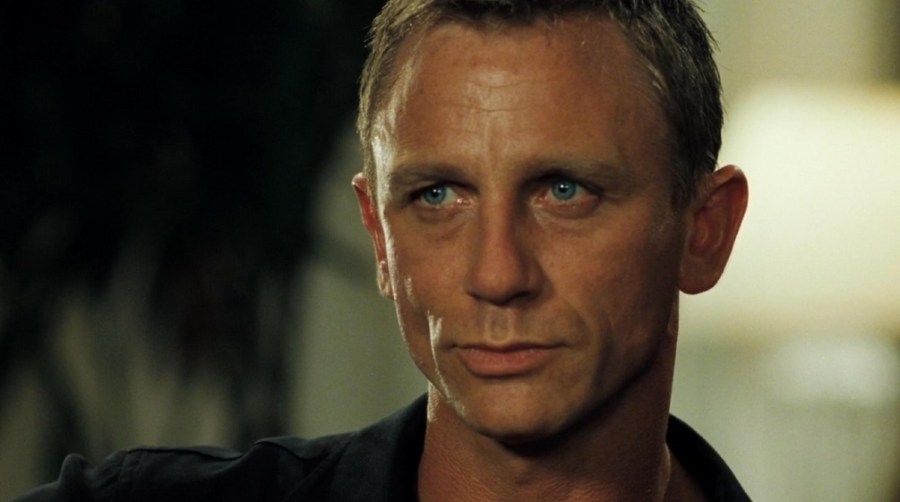
Okay, after that barrage of negativity, is there anything positive in Casino Royale? …I suppose. In no particular order, I did enjoy the performance of Mads Mikkelsen as Le Chiffre. In no way over the top, Mikkelsen combined the right quantities of creepiness and psychosis to make a memorable, if small-scale Bondian villain. He has probably the best line in the movie: when Obanno asks Le Chiffre if he believes in God, Le Chiffre responds, “No. I believe in a reasonable rate of return,” a line worthy of the best Bond villains.
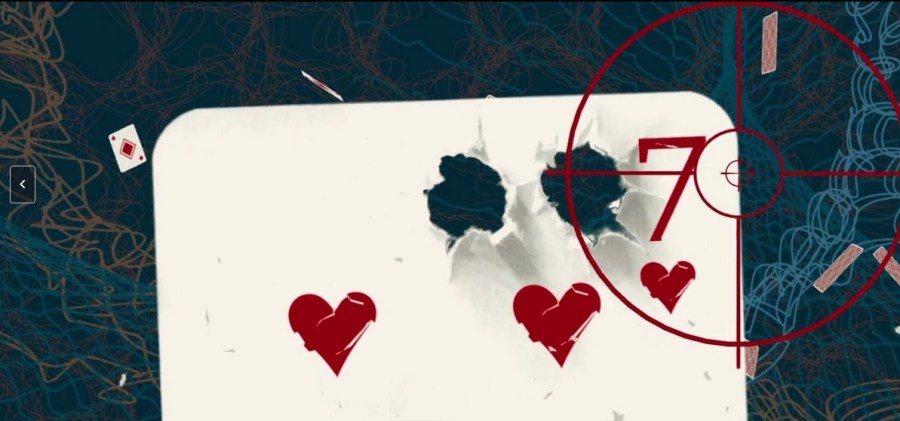
The opening credit sequence, resembling a computer game with Bond battling foes who explode into the various suits of playing cards, is a spectacular addition to the Bond series, and one that gets better with repeat viewings. As well, Chris Cornell’s much-maligned theme song, You Know My Name really grows on you, having the proper Bondian riffs and sweep (as does co-song writer David Arnold’s fine score), along with some evocative lyrics (Arm yourself because no one else here will save you. The odds will betray you. And I will replace you. You can’t deny the prize, it may never fulfill you. It longs to kill you. Are you willing to die? The coldest blood runs through my veins; you know my name.). I think it’s one of the best Bond themes, and combined with the sensational animated credit sequence, it’s almost worth the price of admission alone. Almost.

Read more of Paul’s movie reviews here. Read Paul’s TV reviews at our sister website, Drunk TV.
 Movies & Drinks
Now this is a review I can mostly get behind! I understand they wanted to make it more gritty and realistic but they sucked all the fun out of the movies. Quantum of Solace is even worse but at least it’s so bad you can laugh at it while this film doesn’t even make me chuckle, it’s just so po-faced. The change in how they made the movies is obviously because of Die Another Day and 9/11. I really feel objectively the most accurate Bonds were Connery and Dalton (my favourite is Moore). They felt like actual spies whereas Craig functions more like a brute henchman. Modern Bond movies should be more like The Living Daylights and less like Licence to Kill or whatever this nonsense is.
LikeLike
It is fairly well-known that Barbara Broccoli is all moist in her nether-regions for Craig and that’s why he got the part and was allowed to keep it for 15 frickin’ years. Hope it was worth destroying everything that your father built, Barbara! (SPOILER: it wasn’t)
LikeLiked by 1 person
Love the review, Paul. Always look forward to an inbox ping when a new review comes out. 2 things:
LikeLiked by 1 person
On the whole, this spot-on review almost had me there. Except… for the opening’s hyperbolic wishful-thinking presumption that Pierce Brosnan would EVER “kneel down in front of a shrine of Daniel Craig and mumble a silent prayer” for being saved from being called the “Worst James Bond Ever”. Because I personally don’t believe Brosnan is remotely capable of the humility and self-awareness to draw that kind of honest conclusion, as all of his public statements he’s made over the last THREE decades regarding his association with the role have changed their tune every time he tells it. Which makes him a perpetually disingenuous personality that has always rubbed me the wrong way.
Among the examples of his image-polishing, self-serving dishonesty include saying “he DID see The Living Daylights” and claiming Timothy Dalton was ‘quite good’, then recants by stating he NEVER saw that movie because of some excuse (the in-flight movie malfunctioned, he didn’t want to face it after losing the part over Remington Steele’s renewal, it’s all FATE’s way of telling him not to bother, etc.). THEN after being hired for Goldeneye, Brosnan joins in on the oft-repeated criticism of Dalton being “too soft” and “politically correct” and so forth, while never having seen any of those performances to make up his own mind for himself. Brosnan even declared that he’d like to remake On Her Majesty’s Secret Service with HIM just because he thought HE could do better than “sad” George Lazenby, the “pissed off Aussie”. That smug-ass prick.
But what takes the cake were his post-Die Another Day firing claims of being “kicked to the kerb” by a phone call from Barbara Broccoli, complete with her phony crocodile tears apologizing while saying he was SUCH a Great Bond; yet Brosnan himself very publicly and loudly denounced EON’s “creative paralysis” over their rejection of HIS endorsement of Quentin Tarantino(!) to Direct his 5th movie (of a One-off BLACK & WHITE Casino Royale adaptation, if you can believe that horsepucky) as far back as February 2004, a prime example of spectacularly bad timing when Babs & Michael G. Wilson’s MOTHER Dana Broccoli Wilson (old man Cubby’s widow and then-head of the entire company, until their daughter Babs inherited it For REAL) had just died, thus antagonizing his BOSSES into justifiably firing his ingrate ass that Summer for trying to shame THEM into reversing their decision just to prove Brosnan wrong. Well they sure did, all right. By promptly replacing the previously “perfect”, “proper”, “People’s Choice” with a miserable miscast mumbling misanthropic mope. And it worked.
Considering how Brosnan coasted on that very populism to validate his bland, smug, smarmy, complacent, entitled, insincere, try-hard, MEDIUM TALENT non-performances as James Bond, then cries fowl over being “repressed” from his “intent” to be “tough & gritty” by the “bad writing” and “poor direction” that “ruined” all but ONE of his quartet of vacuous excess (Goldeneye, always the default excuse for him and his apologist fair-weather fake-fans to fall back on, despite that movie being so insufferably pretentious, patronizing and mediocre that I personally LOATHE it more than any of the other “bad” Bond movies in existence), it serves him right to get fired the way he was. And I have no sympathy for him, nor did I ever like him. Which is why Pierce Brosnan will ALWAYS be THE Worst James Bond Ever. And that’s that.
LikeLike