
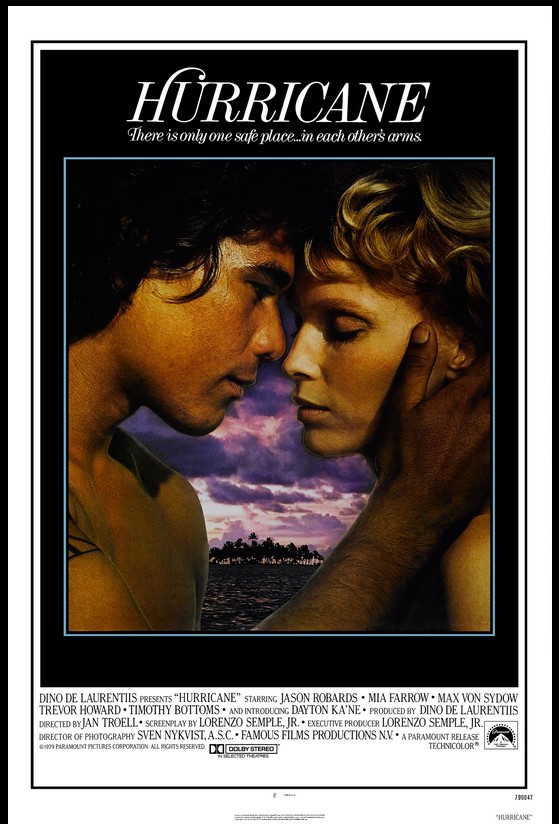
Hey! Did you know that 2024 is the 45th anniversary of the release of Dino DeHorrendous’ epic disaster romance, Hurricane. You didn’t?! Well that’s okay…no one did.
By Paul Mavis
1979’s once-infamous, now utterly forgotten interracial love story/incest-obsessed/water-logged colonialism diatribe/disaster epic Hurricane came out on DVD years ago…and there’s been absolutely zero demand to put it out on Blu-ray. 45 years later, it’s just as bloated and fetid as it was to the few unfortunates (myself included) who happened to catch it during its original run. Featuring some “curious” editing choices, fatal miscasting, and a general atmosphere of unfocused production waste, Hurricane‘s ineptness is both total and un-involving, making it a tough sell…except for those hardy souls who actually enjoy watching shit (again…myself).
Click to order Hurricane on DVD:
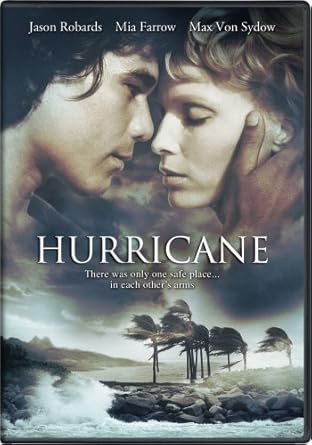
(Paid link. As an Amazon Associate, the website owner earns from qualifying purchases.)
Substantially reworked from the original novel, The Hurricane, by Charles Nordhoff and James Norman Hall (Mutiny on the Bounty), as well as from the first movie adaptation in 1937 from director John Ford, Hurricane now tells the story of colonial oppression and forbidden love in 1920s Pago Pago, Eastern Samoa. Naval Captain Bruckner (Jason Robards) is the U.S. Congress-sanctioned Governor of the island, and he rules it with a stern, patrician, and thoroughly patronizing attitude towards the natives.

Arriving from Boston, Bruckner’s daughter Charlotte (Mia Farrow) is somewhat taken aback by her father’s rigid adherence to the law, particularly when she tries to intervene on behalf of Bruckner’s charge/houseboy Matangi (Dayton Ka’ne), who has involved Charlotte in a scheme to get Bruckner to toss out a harsh penalty issued to a native man who stole a boat “for love.” Bruckner refuses, pish-poshing all this talk of love over the law, and severely reprimands Matangi, much to Charlotte’s dismay.
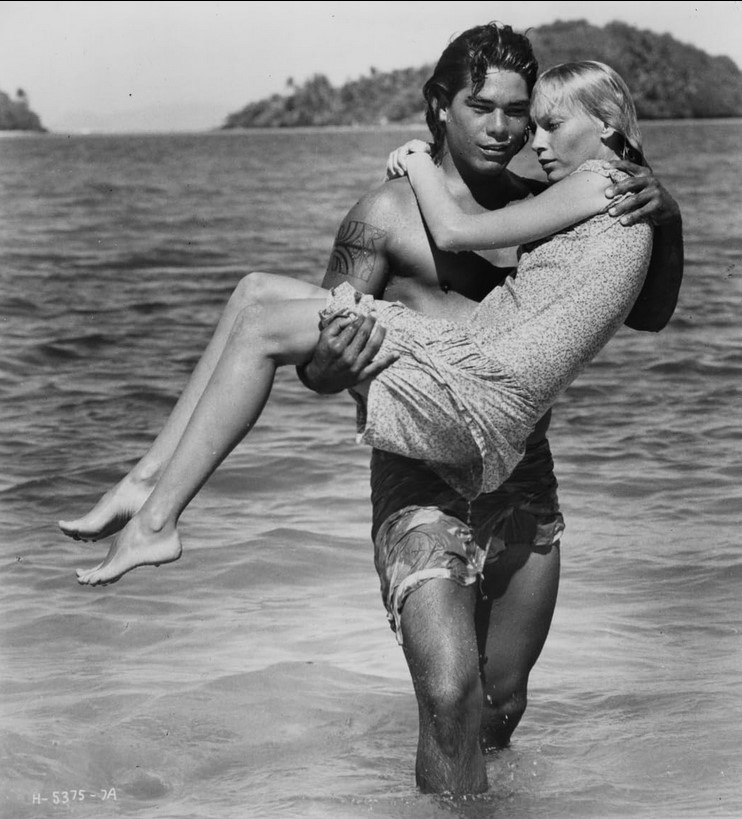
Bruckner comes to regret that intractability, because Matangi is soon anointed the High Chief of his island, Alava. And Matangi isn’t as willing to whole-heartedly accept the edicts of the U.S. forces, particularly if they go against the well-being of his own people—a stubbornness that quietly enrages Bruckner. After a public showdown between Matangi and Bruckner at Matangi’s coronation, and after a suggestive dance by Matangi and his intended, Siva (Bernadette Sarcione), Charlotte wants to stay for a month on the island, chaperoned, no doubt, by Dr. Danielsson (Max von Sydow) and Father Malone (Trevor Howard), who both reside on Alava.
Despite what should be obvious to a father who lusts after his own daughter (that she is attracted to another man, Matangi), he agrees to the stay and sails off for a month. Which is just what the doctor ordered for Matangi and Charlotte, who quickly become lovers. When this is discovered by her father, he goes right round the bend and has Matangi arrested on a trumped up charge. He escapes, with Charlotte’s help, but the lovers’ fate soon rests with Nature, not Bruckner, when a huge hurricane threatens Alava Island.
Hurricane was one of those movies that seemed to generate a tremendous amount of (bad) press during its filming, but which disappeared without a trace once it hit the theatres: unlike his previous box office smash-hit, King Kong, audiences couldn’t have cared less about Dino De Laurentiis‘ latest big-budgeted remake of a Hollywood “classic,” despite all the ink devoted to its production. I haven’t seen Ford’s original The Hurricane in quite some time, so I won’t compare the two, but certainly critics were laying in wait for Hurricane, particularly after De Laurentiis had ticked them off so badly with his (unfairly) savaged King Kong, in 1976.
RELATED | More 1970s film reviews
Something about the combination of Italian super-producer De Laurentiis’ perceived hubris at remaking Hollywood classics, along with a then-ridiculously large budget (I know it seems absolutely quaint now, but $22 million was an insanely large budget for a film back in 1979), convinced the critics that nothing good could ever come from Hurricane—and they were right…although the dubious merits of the movie itself were enough to sink Hurricane, regardless of its production backstory.

It certainly didn’t help matters to have the movie’s original director, Roman Polanski, yanked at the last minute due to his fleeing the United States after being convicted of raping a 13-year-old girl (an outrage that left a pall on the movie before filming ever began). De Laurentiis didn’t do Hurricane any favors, either, by making it appear that production was merely an excuse for a lucrative real estate deal. Filming on then-almost deserted Bora Bora, De Laurentiis bought a sweet piece of beach-front land and built a luxury hotel on it to house his crew and actors, thereby ensuring a profit on the movie before it ever hit the screens—a move that made actors like Trevor Howard claim De Laurentiis was more interested in running a hotel than making an artistically successful picture.
Casting was evidently fraught with difficulty, as well. Hundreds of ingénues were sought for the role of Charlotte before, at the last minute, Mia Farrow was hired (after De Laurentiis couldn’t convince Jessica Lange to work with him again). And for the pivotal role of Matangi, Hawaiian surfer Dayton Ka’ne, an inexperienced novice to moviemaking, was plucked from obscurity for the difficult role. Filming itself on Bora Bora was evidently arduous, with numerous injuries to the crew during the climatic hurricane sequences (which ate up most of the film’s huge budget), while personality clinches and clashes caused dust-ups in the international press: married Farrow and cinematographer Sven Nykvist apparently had a rather scandalous affair, while co-star Timothy Bottoms actually came to blows (!) with Farrow during a tense off-camera moment (team Bottoms all the way…).
Too bad they couldn’t translate any of that backstage drama up onto the screen. Hurricane is a most curious pseudo-epic, in that it’s obviously “big” in scale and execution, but ultimately, remarkably “small” in impact. For starters, the story and screenplay are of the most generic pap, supposedly enlivened by the introduction of sensationalized tidbits of interracial romance and incest. By 1979, a movie about white suppression of South Pacific natives was old hat, and while screenwriter Lorenzo Semple, Jr. (Pretty Poison, Papillon, The Parallax View) tries at times to be fair concerning the American “occupation” of Samoa, Semple’s take on colonialism in the South Seas is negated by his insistence on rendering most of his characters as two-dimensional cut-outs (we never really get to know the natives or their customs, while villains, such as James Keach’s repugnant racist, are so overblown they obviously function as plot devices, not rounded characters).
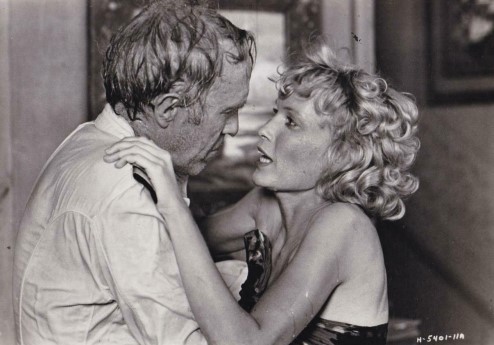
Even sillier is his inclusion of an incest angle that tries to shock and entice the audience while remaining humorously vague by 1979 standards. Jason Robards, just shy of licking his chops and looking as if he’s ready to absolutely pounce on Mia Farrow the minute she lands, is given some vague psychological reasons for lusting after his daughter (his wife left him because he didn’t “give her enough,” and he therefore sees Charlotte as his “other” woman). However, the director, Jan Troell (Zandy’s Bride, The Emigrants, The New Land) makes such a leering, silly spectacle of these scenes, the viewer is tempted to laugh, not recoil in disgust. At once prurient and deliberately coy, (Farrow comes to Robards’ bed, and basically offers herself to him in exchange for Matangi’s release…or does she?) these incest sequences smack of calculated sensationalism: designed to titillate, but executed in pulled-up-short dishonesty.

Semple’s and Troell’s central love story fares no better, with the supposedly “taboo” nature of Charlotte’s and Matangi’s union given short shrift by the lead actors’ inabilities to convey even the faintest erotic heat. There’s not much that can be said about unknown non-actor Ka’ne. I think I remember reading somewhere that he was once billed in promotional materials as the “Polynesian John Travolta,” which about sums up his appeal here. Incapable of conveying even the most basic emotions on screen, Ka’ne frequently appears dazed before the cameras, as if he’s had too much tropical sun.
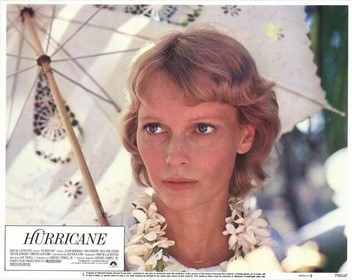
Farrow is even worse; after all, she’s a trained actress. She should have known better (didn’t Avalanche teach her anything?). Far too old to be playing this part (and not nearly “box office” enough to headline a $22 million dollar epic), Farrow can’t convince us she’s involved in a lusty island romance when she’s so damned bloodless to begin with. Frail, whispy, and pale, Farrow couldn’t possibly inspire lust in Matangi’s (or anyone else’s) loins, but she does make a good case for pernicious anemia.
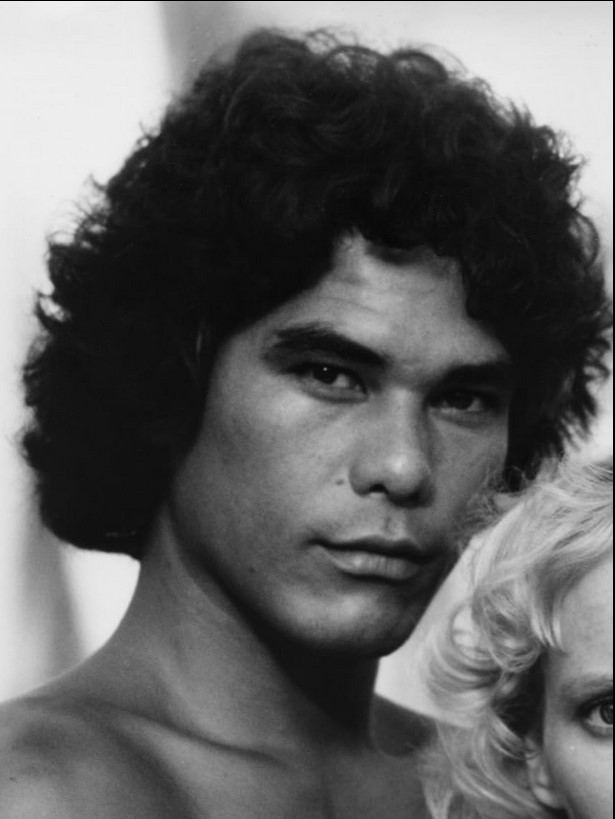
And when she starts that dithering, little-girl-lost frantic shtick of hers, look out (team Woody Allen all the way…). The supposedly lyrical “love montage” between the lovers (floating in the water while holding hands, listening to sea shells, frolicking on the beach) plays more like an old feminine hygiene ad than a taste of forbidden fruit (with equally lame erotic native dances). But more critical, we never understand or are made to feel why they desire each other, and eventually love each other. If there was any kind of explanation or motivation for their actions, it was lost in the editing muddle of this two-hour snooze, and without that central, core understanding—why the lovers are together—Hurricane fails to convince.
Key to Hurricane‘s demise, though, stands firmly with the editing. Looking back on editor Sam O’Steen’s illustrious credits (Who’s Afraid of Virginia Woolf?, Cool Hand Luke, The Graduate, Rosemary’s Baby, Chinatown), one can only pray that the resulting mess that is Hurricane came about because the project was fiddled with by De Laurentiis after O’Steen was finished with it. Huge jumps in continuity and story logic abound, with important plot motivations and points going unexplained throughout the movie.

One minute Farrow is on a date with Bottoms, the next, she’s telling him, “Don’t.” “Don’t” what? One minute Bottoms is fighting with Robards on their navy ship, the next he’s hanging out of the window, apparently dead, with blood dripping out of his ear. How did he die? Is he dead, or just unconscious? We don’t know. One can assume that von Sydow and Howard had bigger parts during actual filming (although the quality of the script doesn’t make that a lead cinch), but they’re reduced to mere minutes on the screen in the final cut—and vague, unfocused minutes they are, too. I’m still scratching my head as to what the hell von Sydow’s character is doing in the film, while Howard’s clichéd Irish priest is just another tired, cantankerous turn by an actor who played this kind of role far too many times for his own good.
Even worse is Hurricane‘s final half hour, where the arrival of the hurricane is met with relief by an audience hopeful that everyone on screen will eventually be wiped out. According to publicity at the time, special effects supervisor Glen Robinson (Tora! Tora! Tora!, Earthquake, The Hindenburg) worked on the original effects for Ford’s earlier version. And individual shots do show tremendous power and beauty (particularly the massive, crashing waves flooding out the whole island).

Importantly, though, there is absolutely no “build” to the sequence. The storm begins, the waves start crashing inland, and then there’s a torrent of water poured all over the sets, shot in gray, hazy, foggy dimness, for the next half hour. It’s not exciting or suspenseful—it’s punishing. There’s no collective power to the assemblage; just inert “bigness.”
And the absolutely insane final shot, which shows our two lovers as the only survivors on a small spit of sand, smiling dreamily into the golden sunrise, is as ludicrous as it is distasteful. Evidently, according to the filmmakers, the easiest way for Matangi and Charlotte to stay together is to have a hurricane come and drown everyone who stands in their way. What Hurricane‘s producers possibly hoped was a metaphor for nature reestablishing order for the young lovers, turns into a particularly nasty and effective way to tie up all those loose plot threads. It’s a pity nobody thought of chucking this project into the sea before a foot of film was wasted.

Read more of Paul’s movie reviews here. Read Paul’s TV reviews at our sister website, Drunk TV.
 Movies & Drinks
I recently watched the John Ford original again – there’s a fine print on YT – and it’s pretty thrilling and the romance is sexy. Incredibly, that really is Mary Astor holding on for dear life against one killer wind machine. This version is everything you said it is. And Mia Farrow is just…sickly.
LikeLiked by 1 person
Yeah, the original is remarkable.
LikeLike
I’m still trying to figure out how not to be anonymous. I am not ashamed.
LikeLiked by 1 person
It’s always better when it’s anonymous….
LikeLike