
We’ve had a week of dark, cool, rainy fall weather here in the Great American Midwest, a seasonal siren call that compels me, on an irresistible genetic level, to watch a few dark, cool, rainy 60s British movies. Add in the Halloween spirit that gets an early start around these parts (quite simply: the Midwest owns All Hallow’s Eve), and that’s made for seven days of rather cozy English chills featuring yards and yards of tweed, seductively heaving “English rose” decolletage, and plenty of stiff, uh…upper lips.
By Paul Mavis
1967’s frequently entertaining “mod” sci-fi/slasher outing, The Sorcerers, breaks rather nicely, however, with quite of few of those endearing British horror conventions of the 1960s. A few years back, Warner Bros.’ manufactured on demand service, the Archive Collection, which provides hard-to-find library and cult titles to hungry movie and TV lovers (and which gets tons of positive vibes and more importantly, eyeballs for their releases courtesy of yours truly, but do they come across with the free screeners? No, they do not, sir!), released The Sorcerers, the 1967 Tigon British Film Productions/Allied Artists shocker starring horror icon Boris Karloff, Catherine Lacey, Ian Ogilvy, Elizabeth Ercy, Victor Henry, a young Susan George, and Ivor Dean.
Click to order The Sorcerers on DVD:

(Paid link. As an Amazon Associate, the website owner earns from qualifying purchases.)
Long sought-after here in the States as director Michael Reeves’ reputation soared over the decades (all on the basis, really, of a potent, morbid P.R. combination of directing just one really superlative movie…and then killing himself), The Sorcerers‘s grimy, grungy fusion of “Swingin’ London” expose and tatty, backstreet sci-fi/horror exploiter, gives it a unique, unexpected tone…but really, it’s not very sexy or scary, even by the tamer exploitation standards of its time.

The wet, dirty backstreets of London, 1967. Disgraced practitioner of “Medical Hypnosis,” Professor Marcus Monserrat (Boris Karloff), thirty years ago a man with an important reputation in his field, has been reduced to painfully shuffling down to the local grotty tobacconist shop to pay his five bob newspaper bill, in order to have his equally unprepossessing 3 x 5 typed advert put back on the shop’s bulletin board. Arriving back at his depressing, squalid little flat, his long-suffering wife Estelle (Catherine Lacey) informs him that a patient with a twitch stopped by…and left. Such is the fate of penniless, dishonored hypnotherapists.
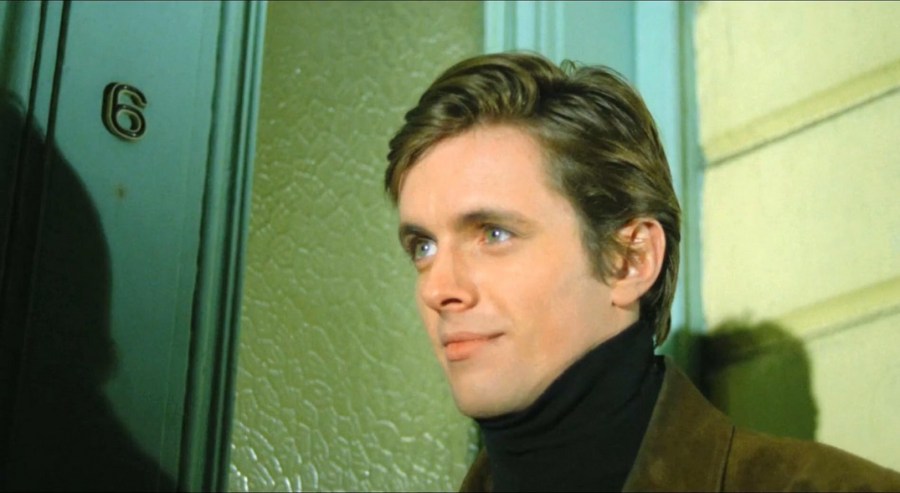
But not for long. Professor Monserrat’s latest invention is finally operational, and at former assistant Estelle’s feverish insistence, a suitable subject is needed that night to test it out. What the Monserrats need is a person whose mind is bored and open to suggestions—suggestions that won’t clash with a messy conscience. For you see, Professor Monserrat has fashioned a machine (out of what looks to be the junked inventory of your average 6th Grade A/V club), a machine that can not only brainwash a person into following the Professor’s and Estelle’s long-distance telekinetic instructions, but also transfer all of the guinea pig’s subjective sensations—sight, sound, taste, touch—to them, as if they’re experiencing them.
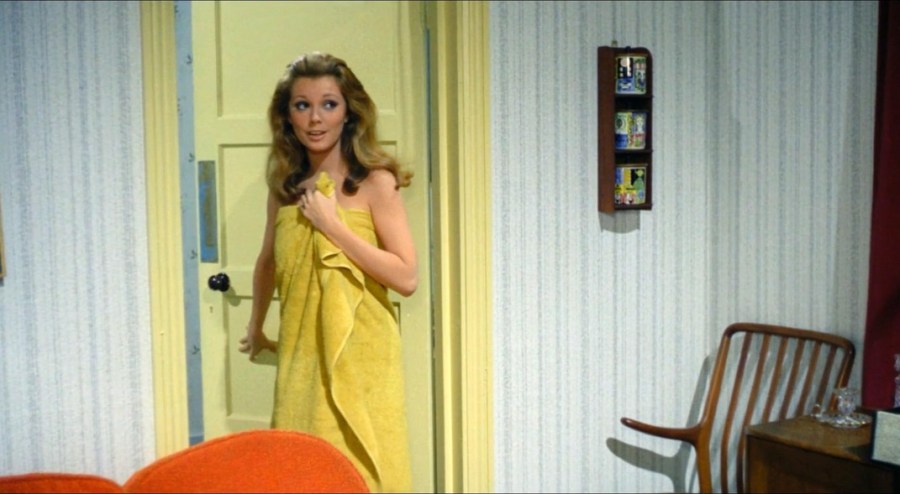
And who will that guinea pig be? None other than young stud-about-town, Mike Roscoe (Ian Ogilvy), a thoroughly bored mod who can’t even summon up the appropriate lust for stacked girlfriend, Nicole (Elizabeth Ercy). It will take the Monserrats’ immoral meddling to truly get a (murderous) rise out of Mike.
RELATED | More 1960s film reviews
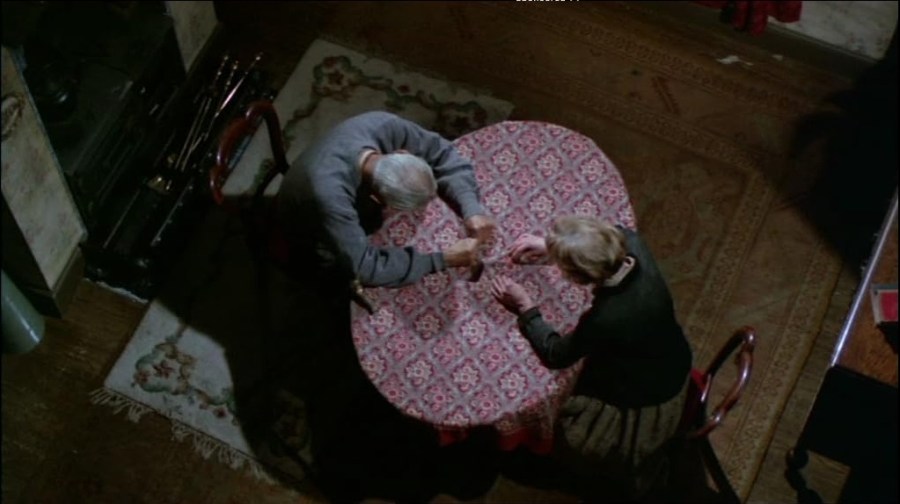
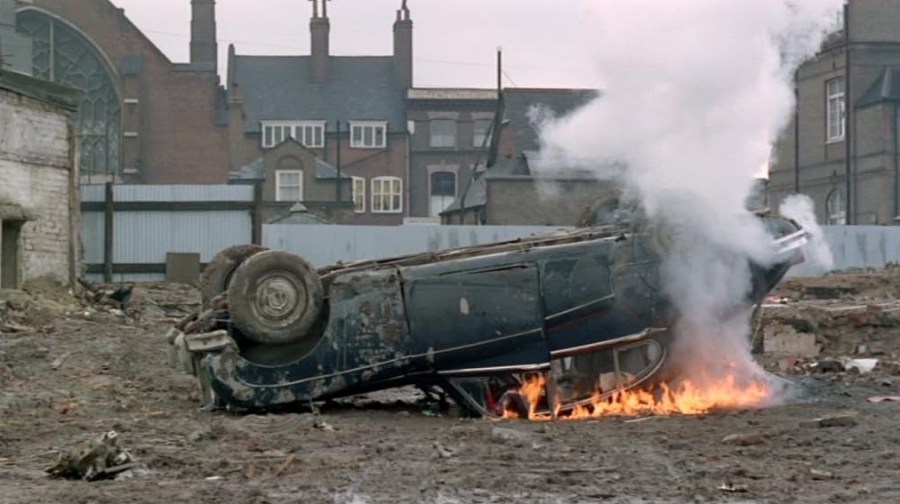
What I always remember first about The Sorcerers is its suitably dread-filled, grungy, low-key atmosphere, a downbeat pulse that seems at odds with how most exploitation numbers from that period would have handled such material. Director Michael Reeves manages right from the first frames to put the viewer off by taking “Number One Horror Icon” Boris Karloff and reducing him to, visually, nothing more than a bum on the street.
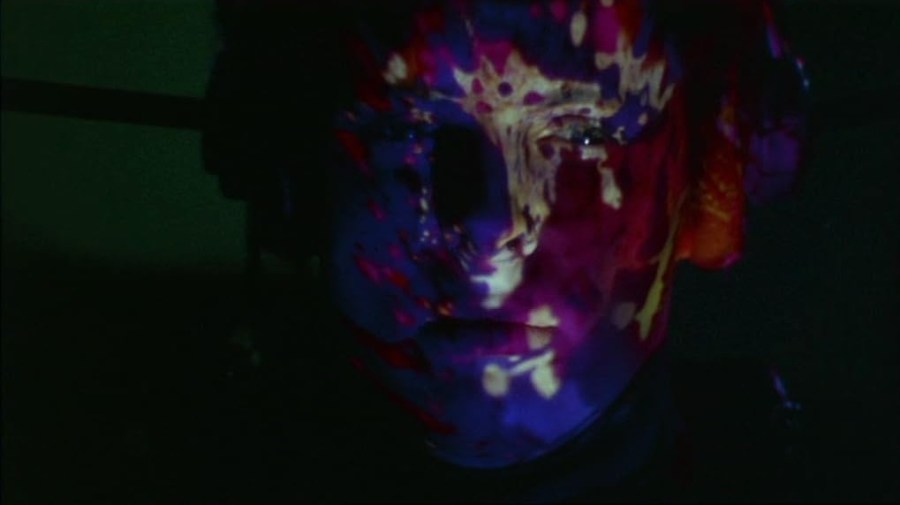
When we think of Karloff from his ’60s career, chances are we tend to first drum up images from his glossy, candy-colored widescreen efforts at AIP. But here, Reeves and noted sexploitation director Stanley Long (The Wife Swappers and Adventures of a Plumber’s Mate, working here as Reeves’ cinematographer) throw Karloff out on some dark, filthy London street, shooting at a higher angle to emphasize his frail, arthritic frame, making a pathetic figure out of this truly larger-than-life horror icon.
It’s a startling first impression for the viewer (aided by famed exploitation composer Paul Ferris’ weird psychedelic score), one we don’t expect, and Reeves keeps it up by putting Karloff in what has to be one of the most depressing-looking London flats I’ve ever seen on film, with an equally squalid little “laboratory” (a white-painted bedroom with cheap shelving, dotted with hand-me-down hi-fi equipment). This is the home and workplace of a genius mad scientist?

Even the local disco and apartments of the “mod” young things that occupy the supposed other side of London’s “swingin’ scene” are frumpy and dim and unattractive. With these tattered, tacky, dark, joyless surroundings, no wonder Ogilvy’s character is just as bored with his so-called free-wheeling lifestyle as Estelle is with her mangy lot in life.

But just like the tourist guides always say, you can’t eat the scenery. Atmosphere alone, no matter how intelligently or intriguingly it’s contrasted against prescribed genre expectations, is not enough to make a movie “brilliant.” The Sorcerers—while certainly entertaining—has attracted an overheated reputation as a neglected work of “art” because it features a huge star of the genre (on his last legs) in a more-or-less “serious” effort within said genre, and because it was directed by a sophomore novice who would helm only one more feature before killing himself in a drug overdose: 1968’s brilliant The Witchfinder General (The Conqueror Worm), starring Vincent Price.

Of course critics want to love Boris Karloff in The Sorcerers because he had starred in so much crap by this point in his career; it wasn’t exactly a bar set high. He was the kind of genre star that fans adored, so any “serious” effort in his long, long filmography automatically got a bump from critics wearied by the equally long list of losers in which he appeared. Conversely, the same holds true for director Reeves. Since he only helmed three movies, the last one a rightfully acknowledged masterpiece, then of course this sophomore project must have elements in it that make it a cut above other similar efforts, right? As an added prop for The Sorcerers‘s rep, you can’t discount the whole “what if?” morbid fascination with Reeves’ untimely death. To put it callously—for what else is the movie business but callous and cruel—that’s P.R. gold for critics drenched in the phony romanticism of the auteur theory.
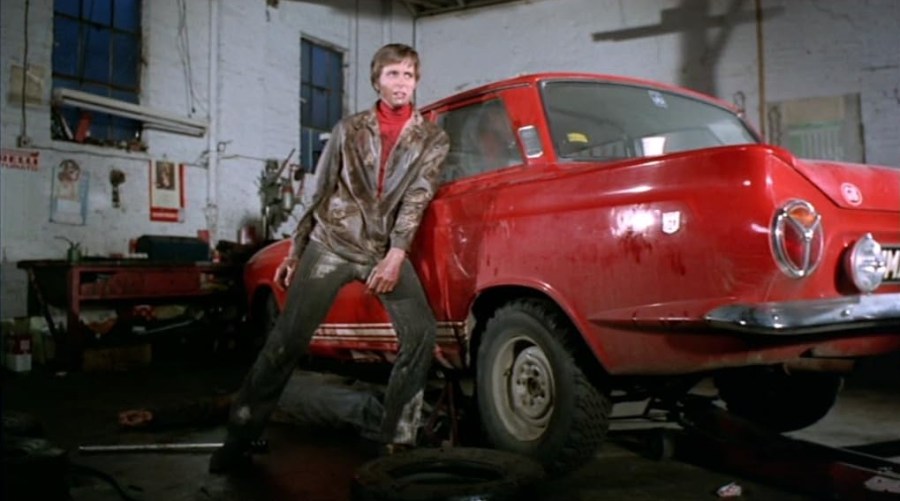
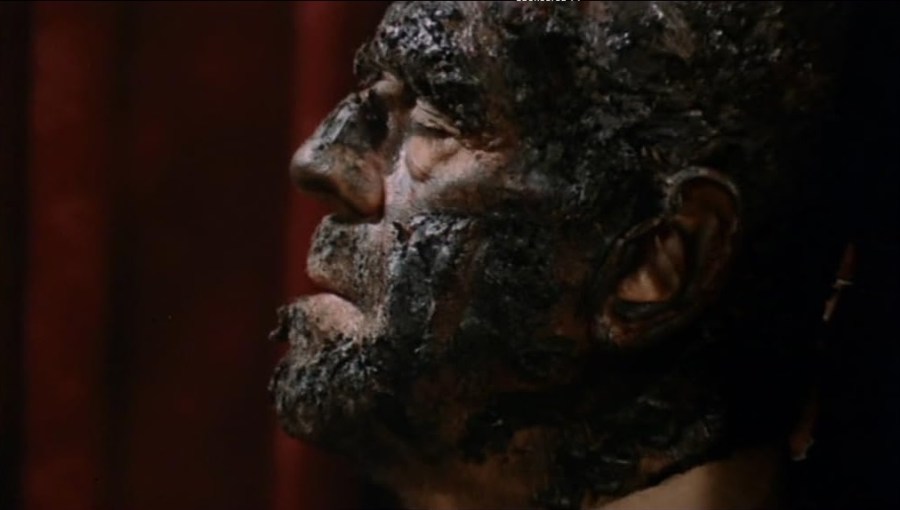
The only problem with all those perceptions are that they’re outside of the movie. They’re brought in by critics already looking for evidence when they watch The Sorcerers. Taken out of those contexts (perhaps best done by a viewer who’s never heard of Reeves), The Sorcerers can be experienced as a reasonably entertaining, nostalgic entry from 60’s U.K. horror/exploitation, with some intriguing ideas and visuals for spice…but as “neglected masterpiece,” no. Too much of what we want to find in The Sorcerers is actually missing: we extrapolate it later.

Sure it’s a happy, cool accident that Karloff didn’t want to play the overt heavy here, with those negative characteristics thrown to Catherine Lacey’s Estelle. With a plot line that promises the viewer vicarious, nasty thrills (“He turns them ON…he turns them OFF…to Live…Love…Die or KILL!”), it’s quite effective to see the wife be the aggressor in instigating the escalating crimes of Ogilvy. Critically, however, Reeves and co-scripter Tom Baker fail to ground the viewer in enough information about Estelle’s condition to make her transformation into a killer meaningful.
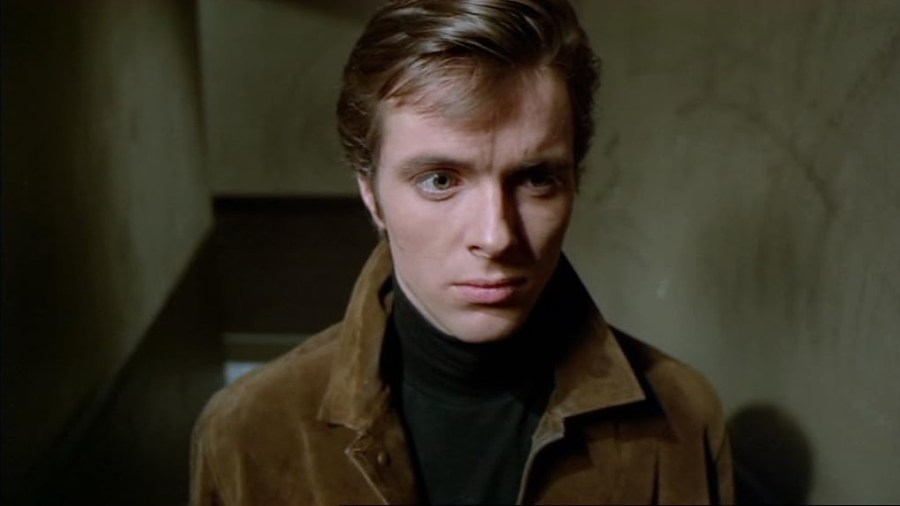

Sure we can fill-in the info ourselves. We can guess that she’s had enough of being poor, of being a shamed nobody. But where is that in the movie (Reeves can’t even give us a 30-second shot of Estelle heaving a big sigh in her shitty hole of a kitchen)? It doesn’t help, either, that Reeves has Lacey start off at “10” in her first scene, practically salivating over the prospect of roping-in their first victim—where, then, is the “build” in this okay but frankly routine, even hammy performance? And sure we get that she’s becoming drunk with power…but why does she turn to outsourced murder? You can guess, I suppose, but that’s a pretty powerful development in her character, and Reeves does nothing to illuminate its sudden appearance (nor, either, the sudden tug-of-war between Lacey and Karloff—another delightful ham who looks incredulously at times, at Lacey’s turn here).

The same goes for Ogilvy’s character, which turns out to be the movie’s biggest disappointment. At the opening of the movie, Reeves hints at a potentially delicious bit of social irony: Ogilvy’s bored, sated mod is the perfect guinea pig/potential killer because he’s already bereft of true human emotion (Karloff says as much when he jokes with Estelle that bored kids today have to take drugs just to stay awake). So as we watch the talented Ogilvy, who reminds me here of a posh, cleaned-up David Bowie, drift around killing nubile girls, we can theorize that Reeves may be saying that Mike is already a serial killer-in-waiting, due to society’s inability to adequately stimulate or engage young people like him.

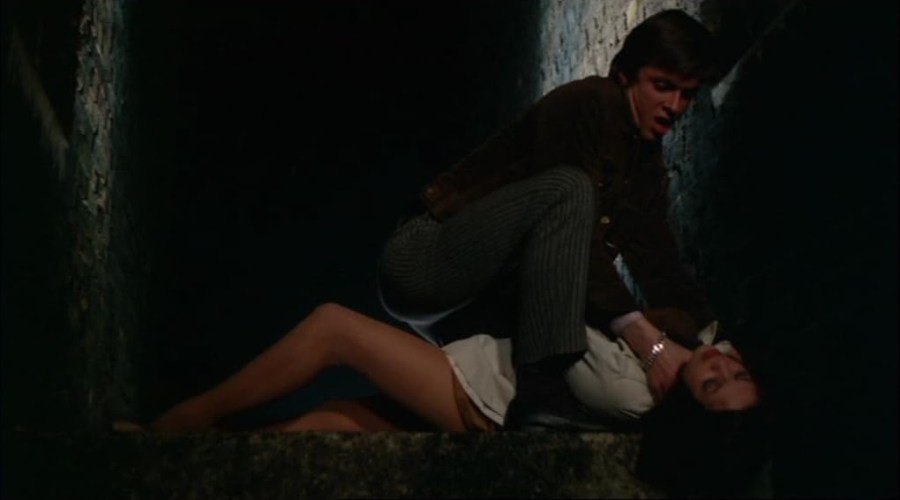
…but those thoughts are coming from us, and not from anything in The Sorcerers. Hints of deeper things are the same as hints of baser things in The Sorcerers: inadequate. Just the same way I’m ultimately disappointed that Reeves lays out just the promise of ideas only to drop them entirely, from an exploitation angle, I’m unsatisfied when The Sorcerers takes what should be sure-fire exploitation set-ups and either flubs or ignores them completely.
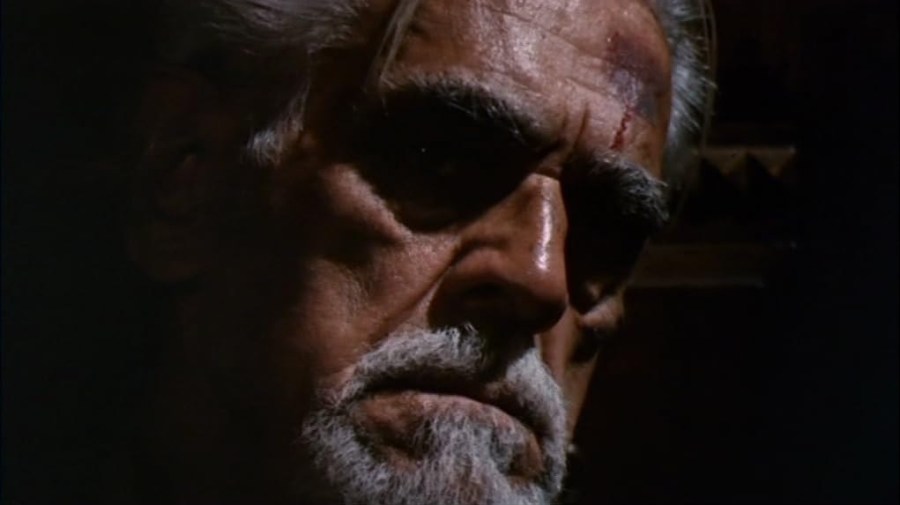
If Karloff and Lacey can feel everything Ogilvy does…wouldn’t you think someone involved in The Sorcerers would suggest not modestly cutting away when Ogilvy takes a swim with gorgeous Elizabeth Ercy (who looks yowza in that black underwear)? We can’t get a scene of “decent” Karloff being degraded as id-driven Lacey voyeuristically enjoys Ogilvy making love to Ercy? That thought didn’t occur to anyone…or am I the only perv in the room?

I don’t care how many intriguing threads are woven into The Sorcerers‘ subtext—even if they’re largely woven in there by me out of frustration. If an exploitation mvie, no matter how well-intentioned, fails to “exploit,” it’s failed on its most basic level. Yes, there are a few unnerving, creepy shots and scenes in The Sorcerers—it does deliver very basic chills and thrills—and the location work, under Reeves’ steady, inventive framing, are enough to make you glad you watched the movie. And even if none of that were there, you’d still enjoy The Sorcerers for the presence alone of Boris Karloff. But honestly, this is fairly tame stuff in the end, with only hypnotic suggestions of ideas, playing around the corners. And that doesn’t equal a “masterpiece.”

Read more of Paul’s movie reviews here. Read Paul’s TV reviews at our sister website, Drunk TV.
 Movies & Drinks